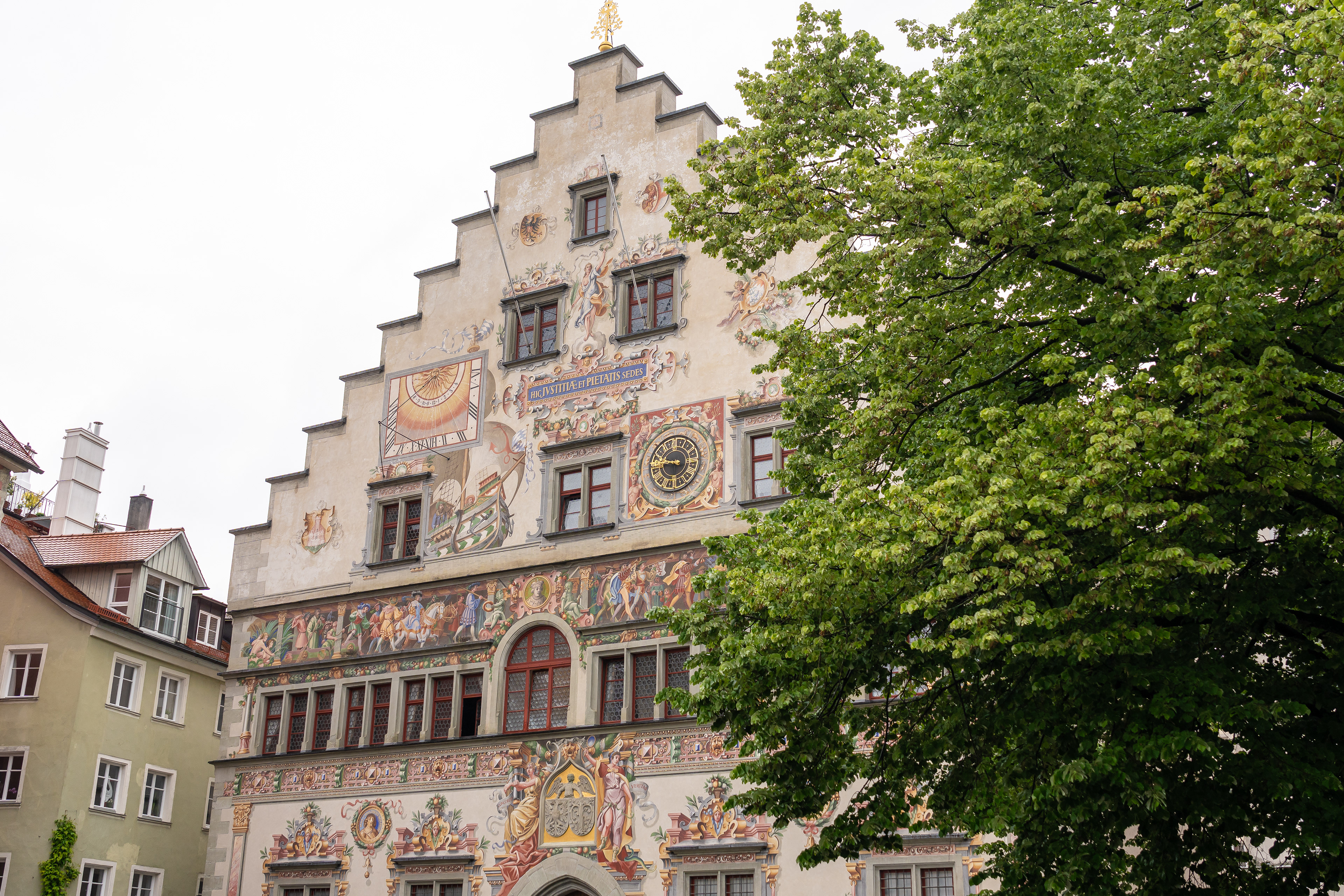
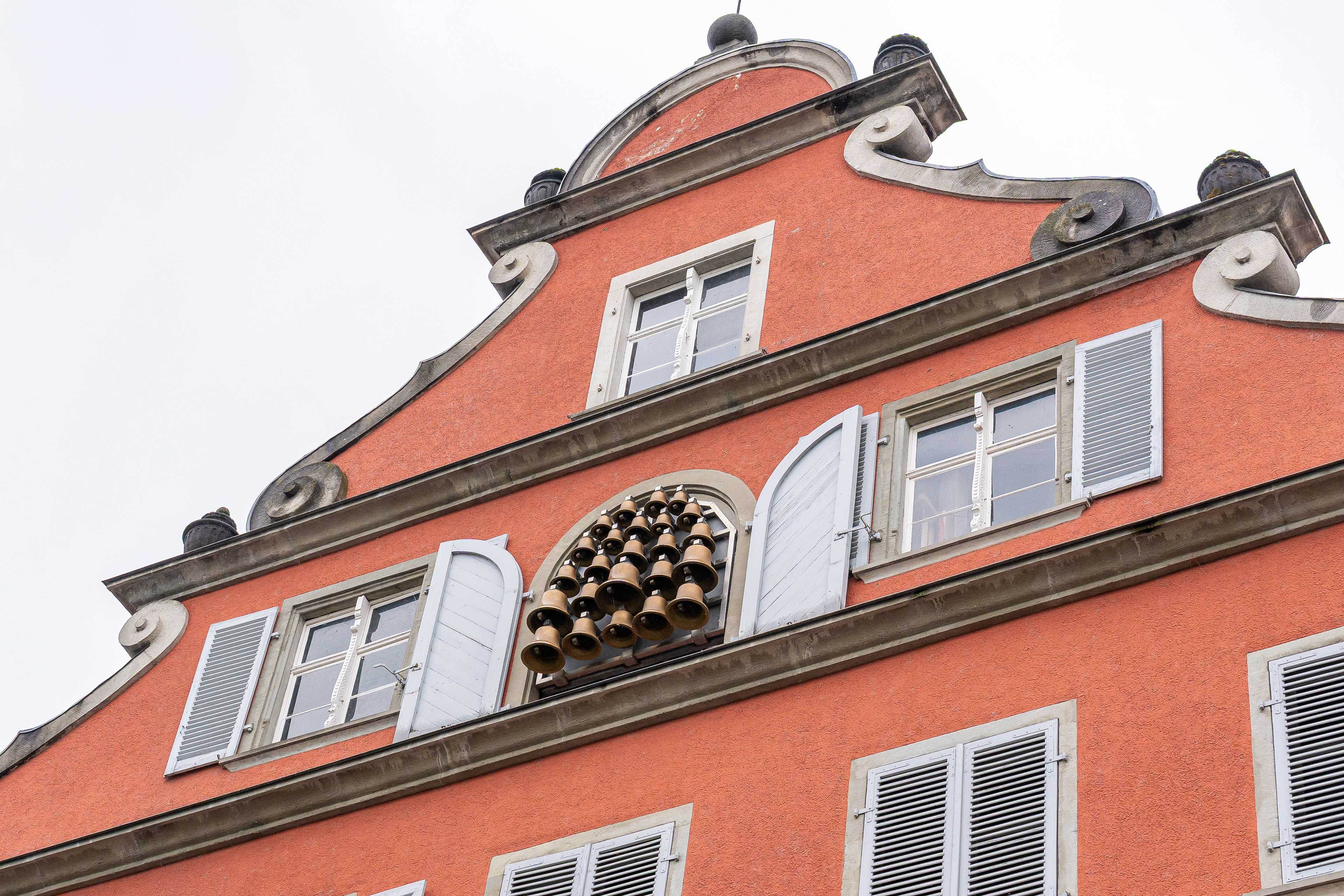
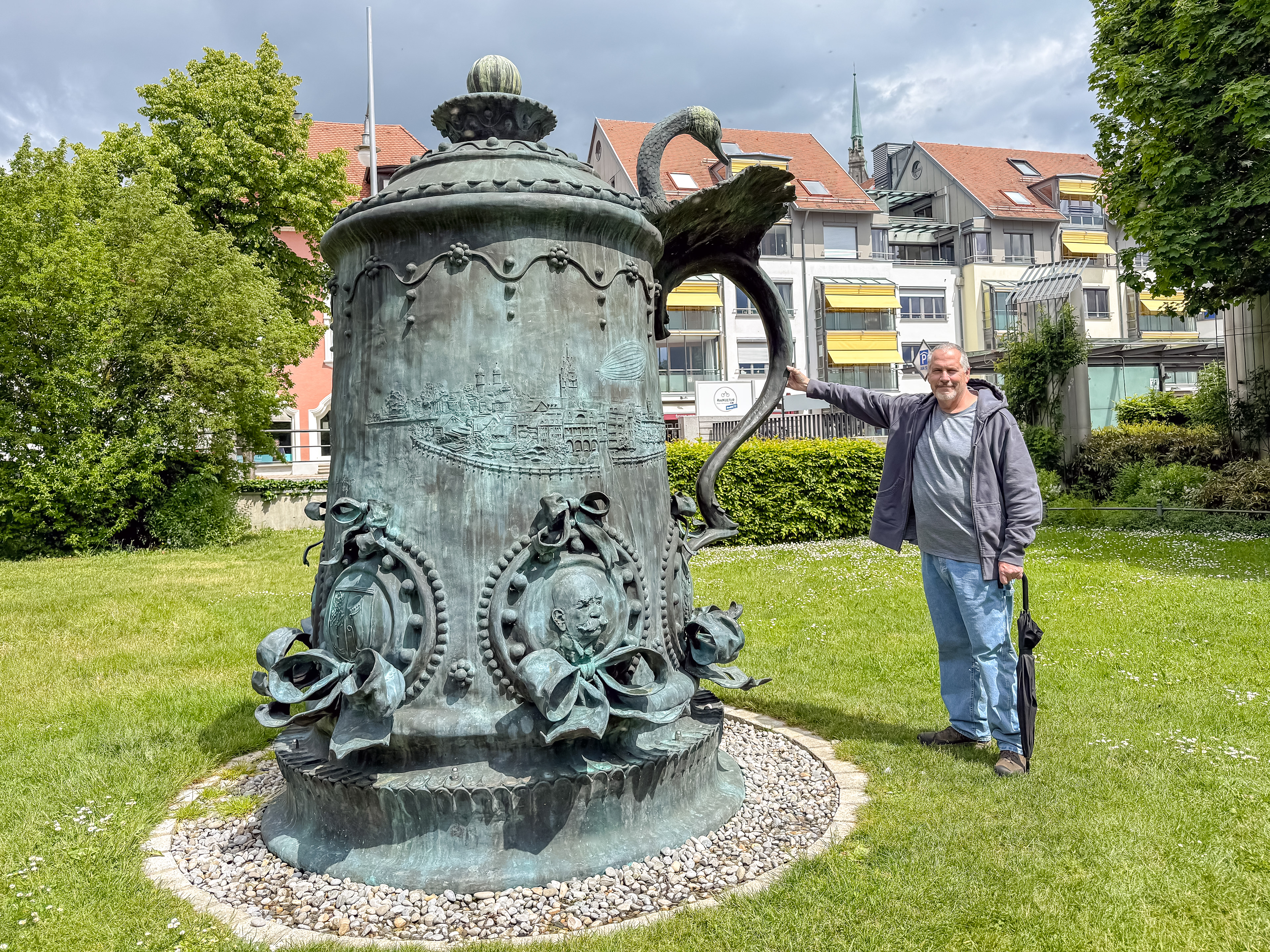
The Altes Rathaus, also known as the Old Town Hall, was constructed in 1422.
Our first day of the Gate 1 Tour, May 20, and we were all on the bus just after 8 am! Our bus was a dedicated Gate 1 Tour bus ... one of the big ones! You could seat more than 40 people on there easily. And there were only 9 of us (which included Farid our Tour Guide, and George our Bus Driver). Adding the two ladies who were joining the group the following day, needless to say, we still had a LOT of room to spread out on the bus. And it was very nice and clean. Seats were plush, you could recline, there were seatbelts, and adjustable air knobs and light above you (like on an airplane), and there was a pocket and adjustable footrest on the seat in front of you. There was a tiny bathroom for emergencies (we didn't use), and two outside doors, one up front and one halfway back, for convenience. Gate 1 Travel does it up right!
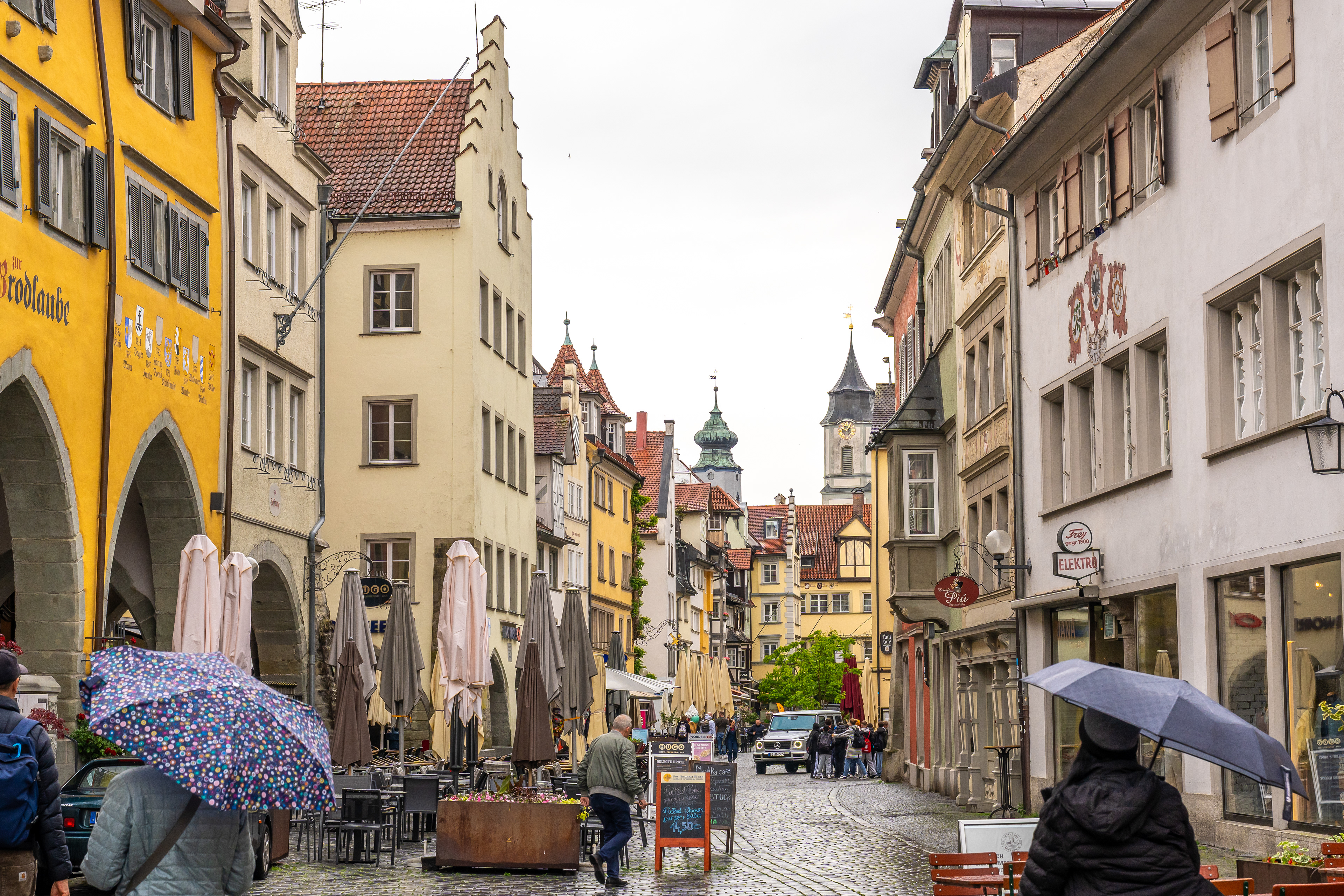
We had rain the first half of the day as we toured the tiny historic downtown island of Lindau, located in Bavaria Germany. We had a local guide who walked us through the streets and shared some of the history of the town and buildings.
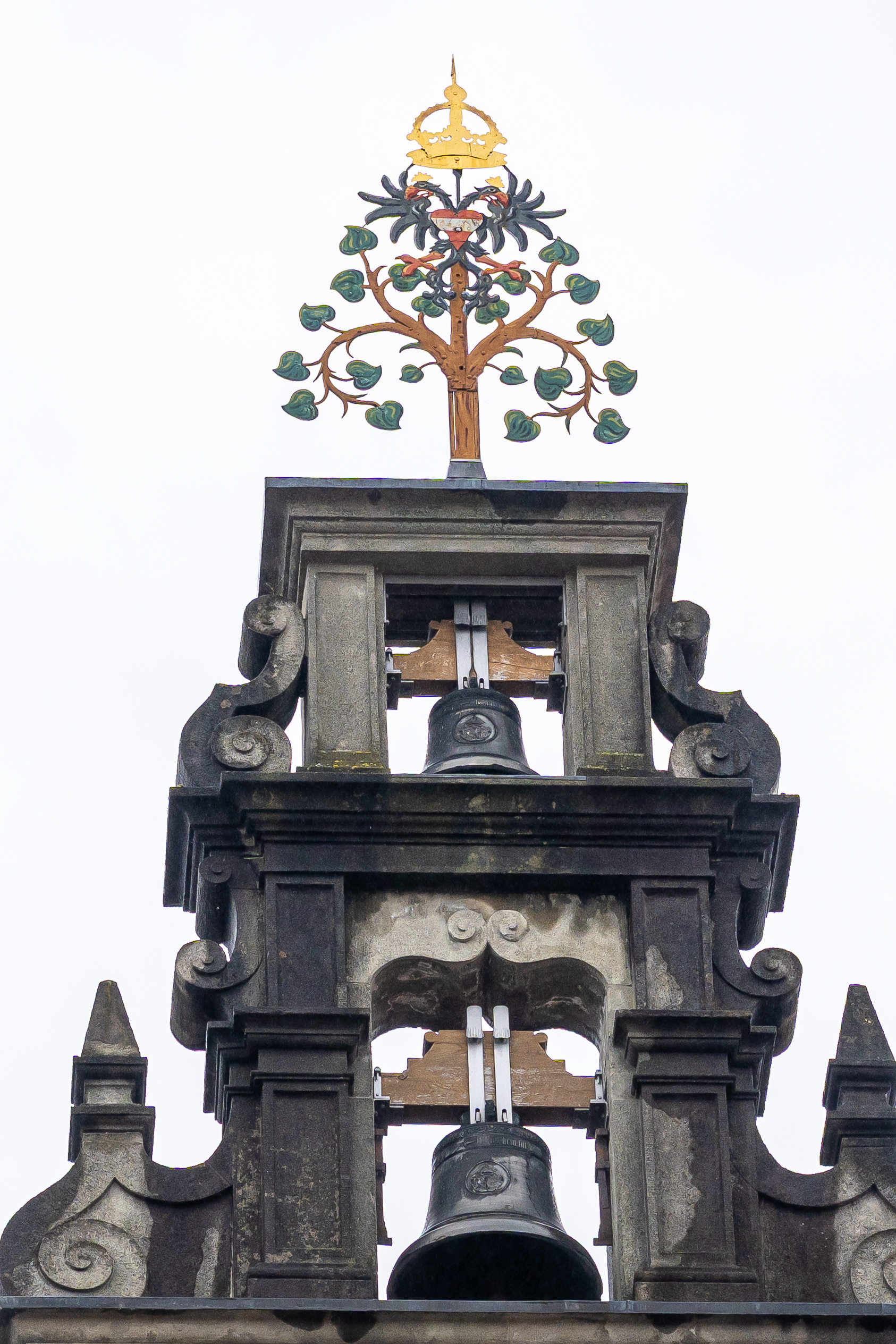
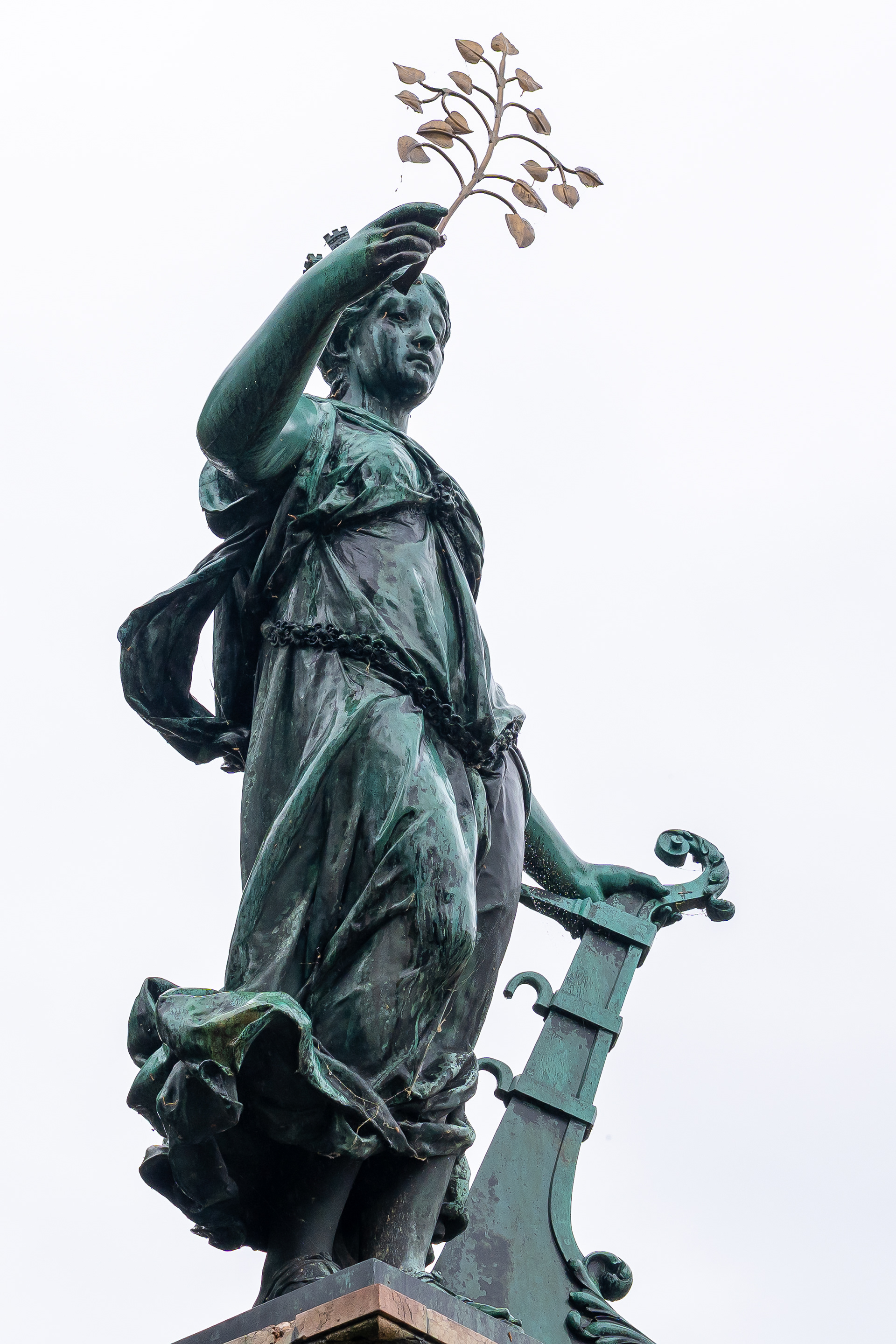
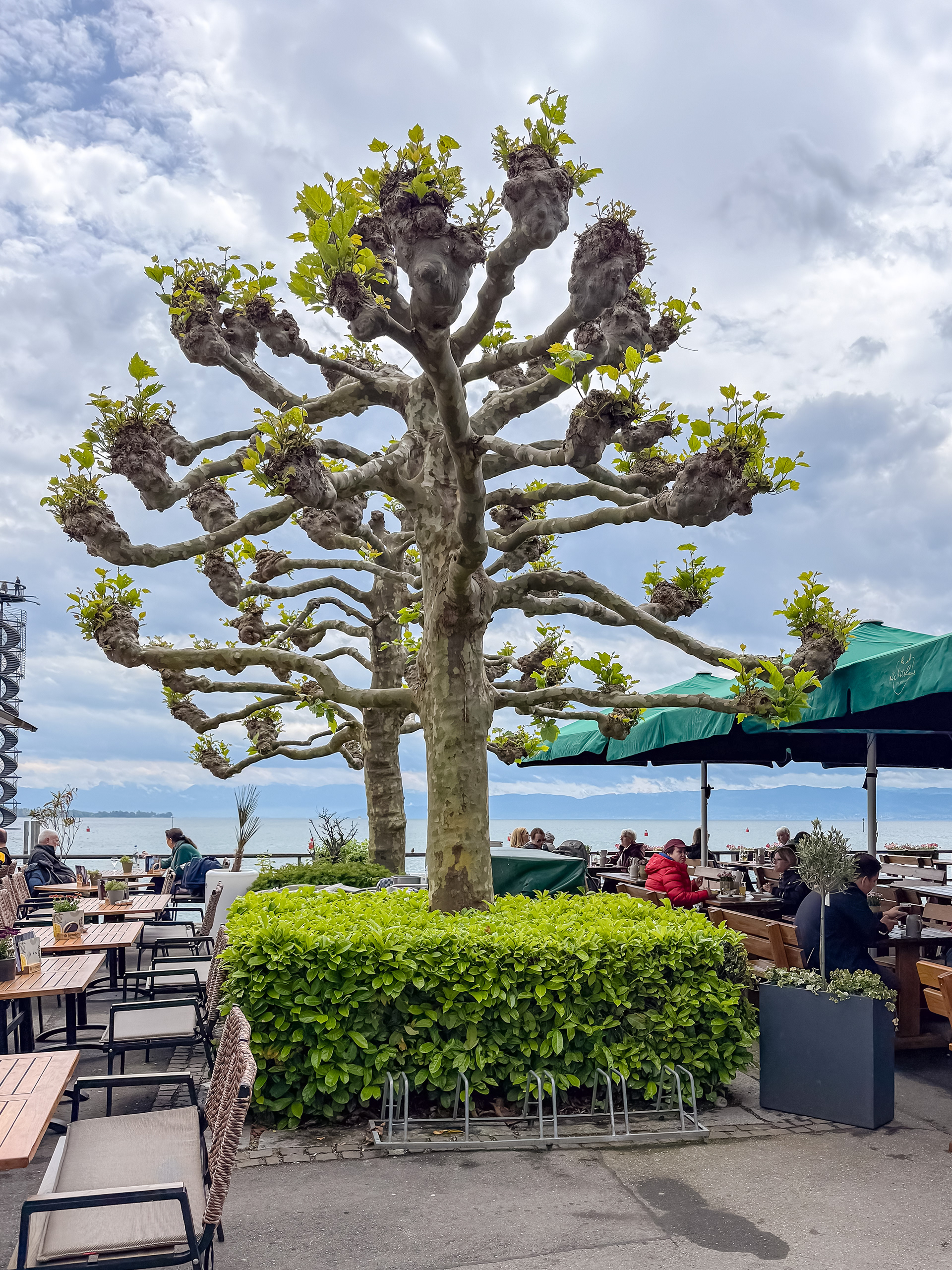
Lindau is named for the linden tree, which adorns a lot of their statues and buildings (see all three photos above). In 882, a monk wrote about the area "where linden trees grew," which led to the name. In America the tree is better known, or most resembles, a basswood tree with its heart-shaped leaves.
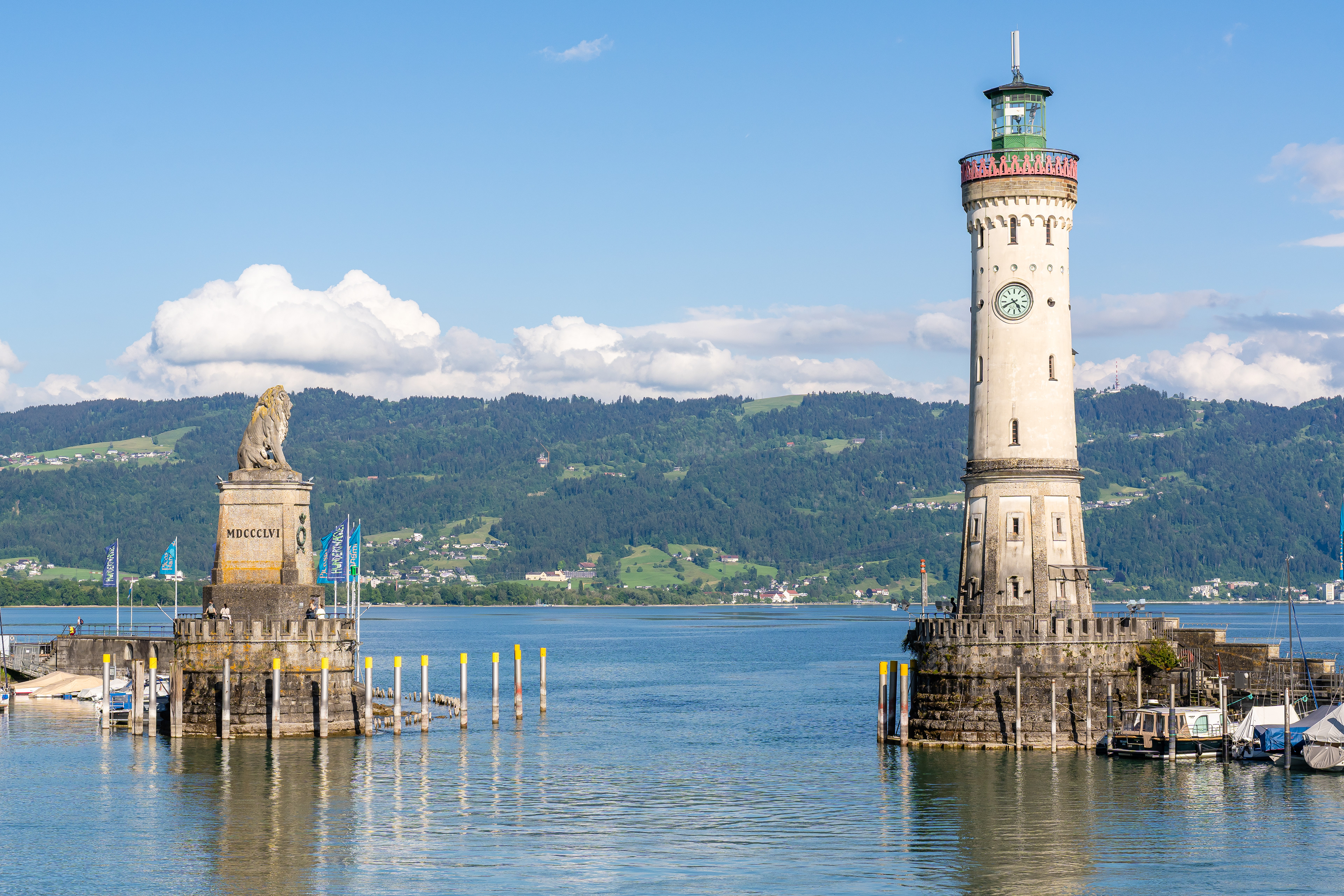
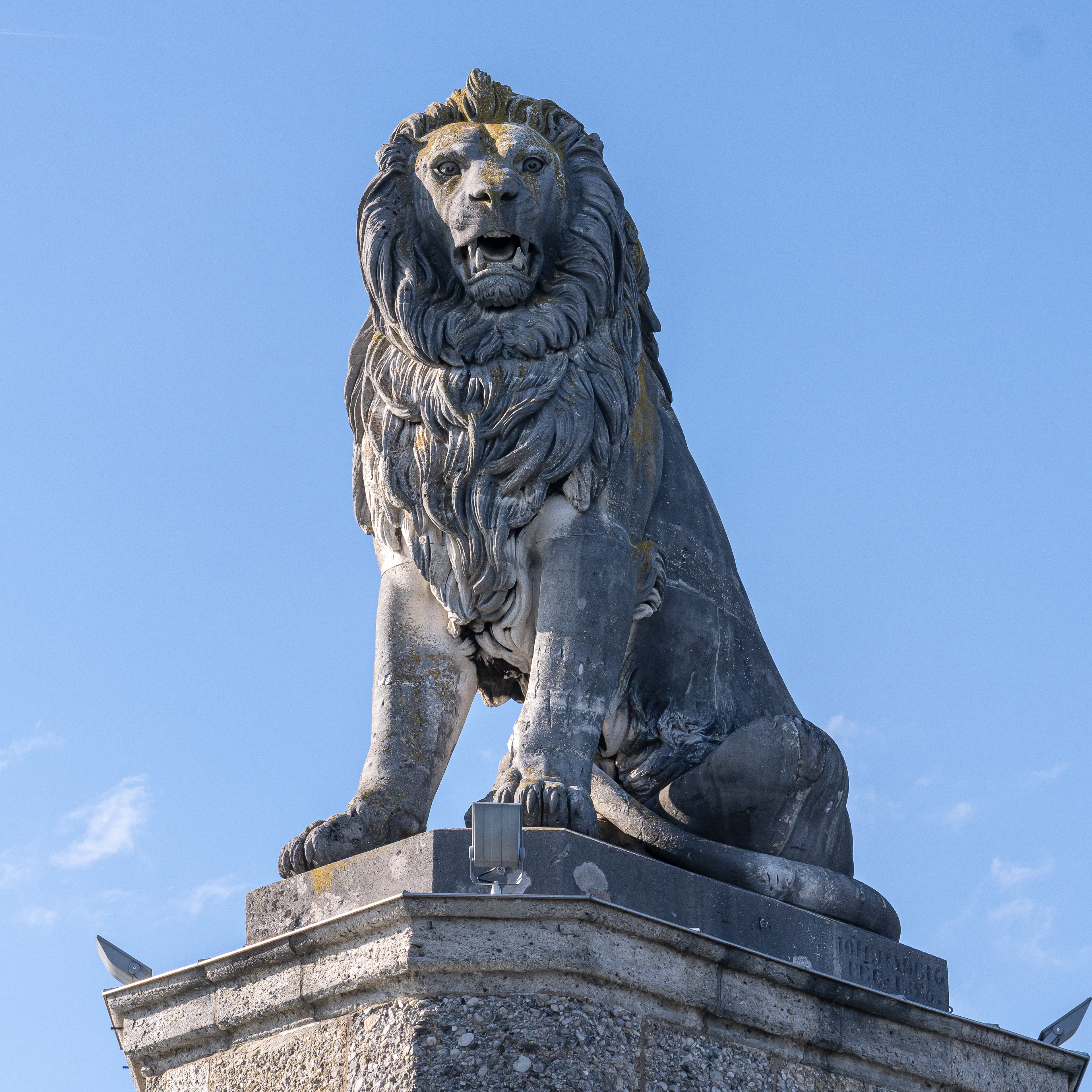
They say that Lindau's harbor entrance is the most beautiful one on Lake Constance. The Bavarian lion is by Munich professor Johann von Halbig. It's made of sandstone and was completed in 1856, indicated by the Roman numerals on the side. The working lighthouse is one of the few to have a clock featured on its facade.
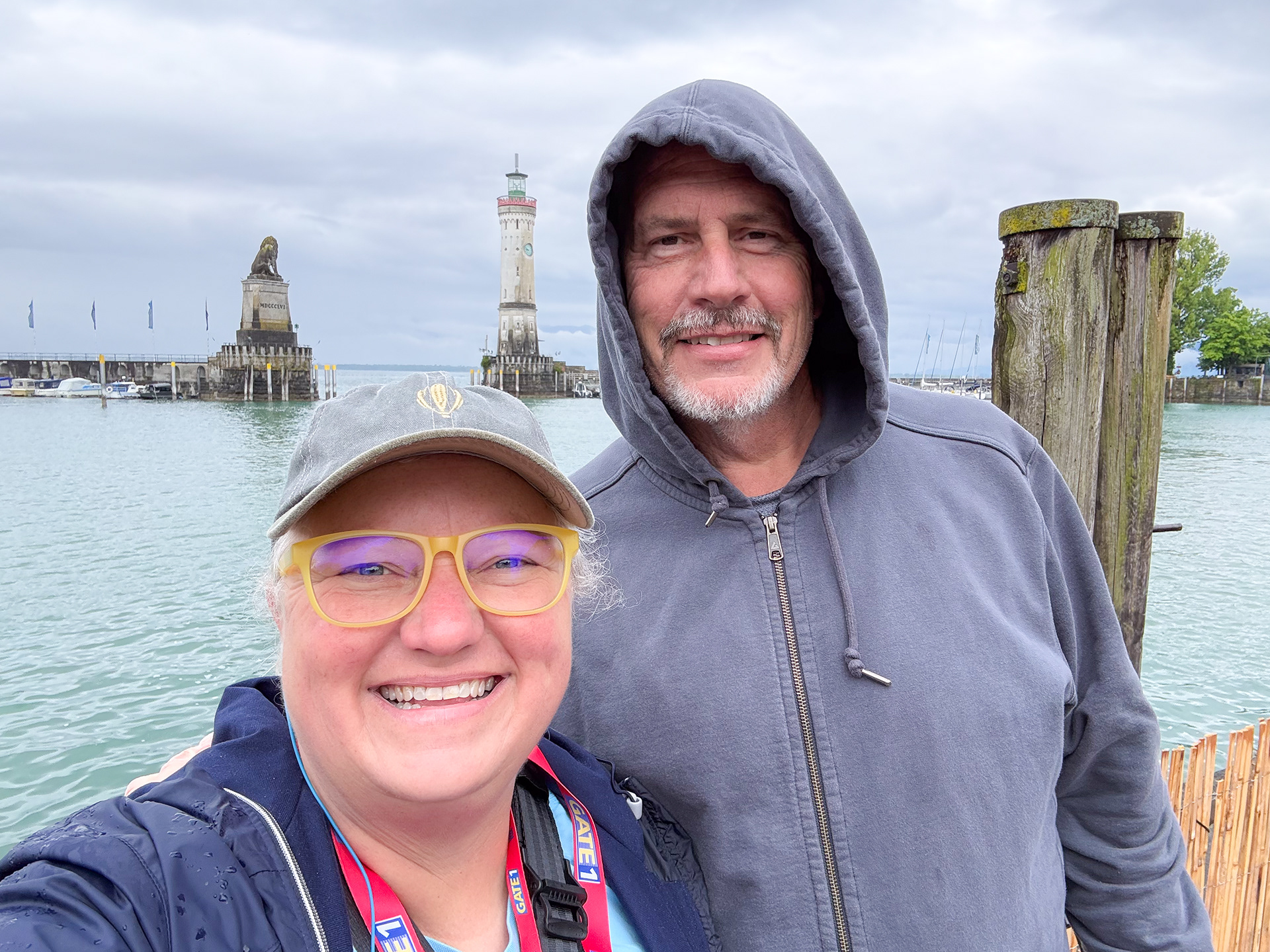
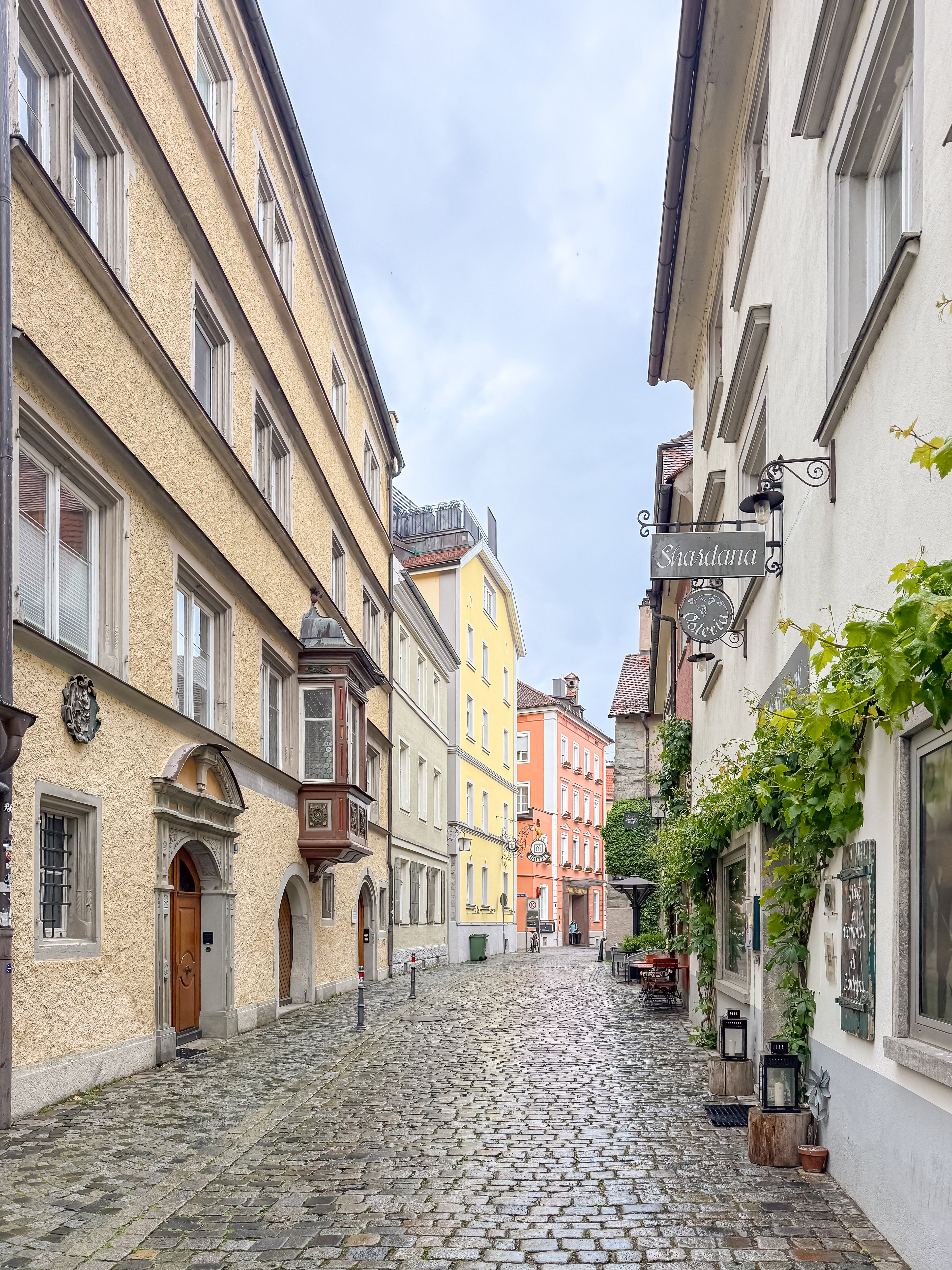
We didn't have much time in Lindau. Plus with the rain and it being cold, we were ready to hurry through. But it was such a cute town and I'd have liked to been able to explore it more. But after the hour walking tour, it was back to the bus! We drove another 45 minutes or so further up along Lake Constance to Friedrichshafen where we toured the Zeppelin Museum.
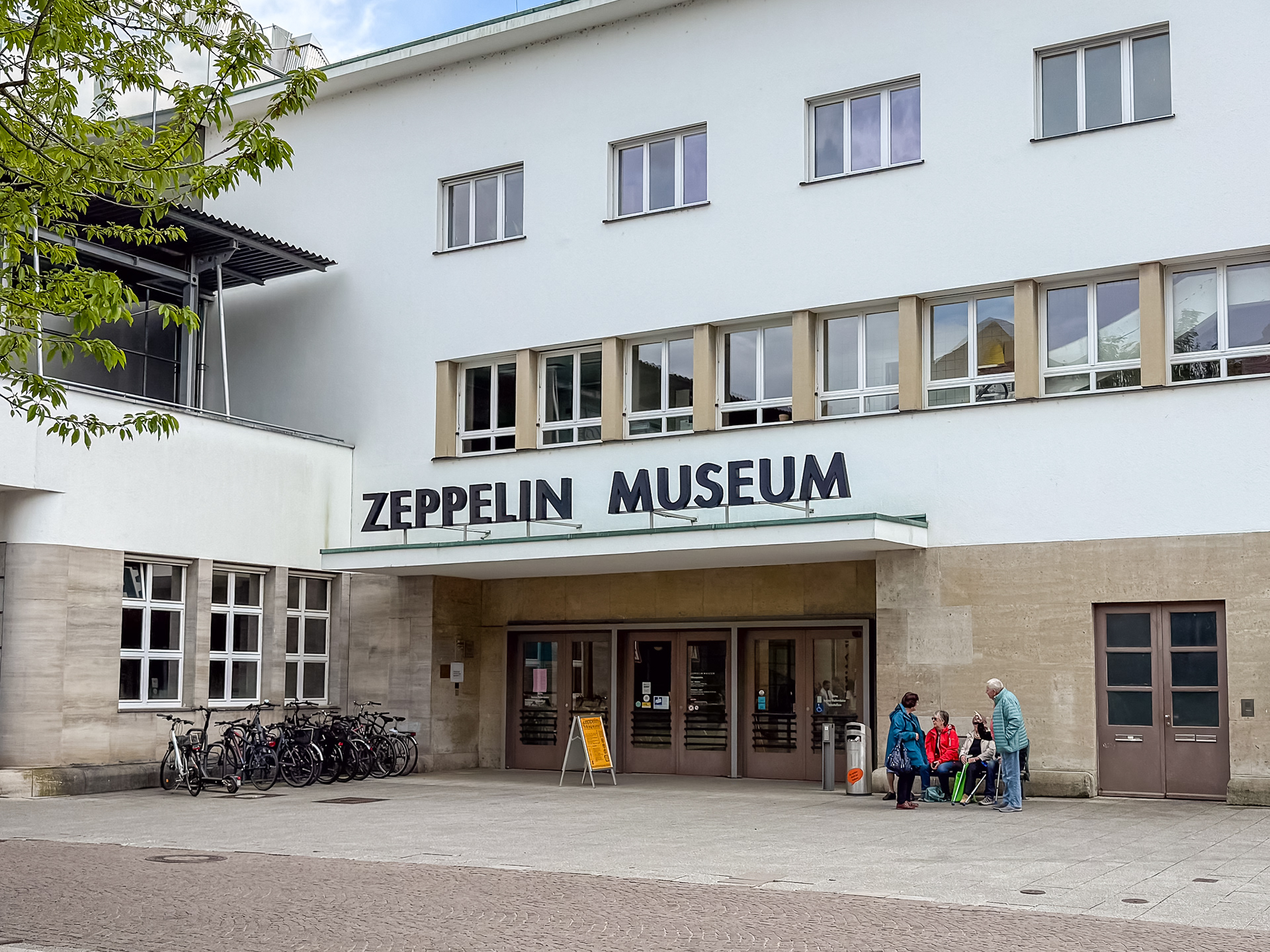
My knowledge of zeppelins wasn't very extensive. I knew the Hindenburg had blown up; I knew today's blimps had probably evolved from that; and I knew we weren't about to see an exhibit on Led Zeppelin.
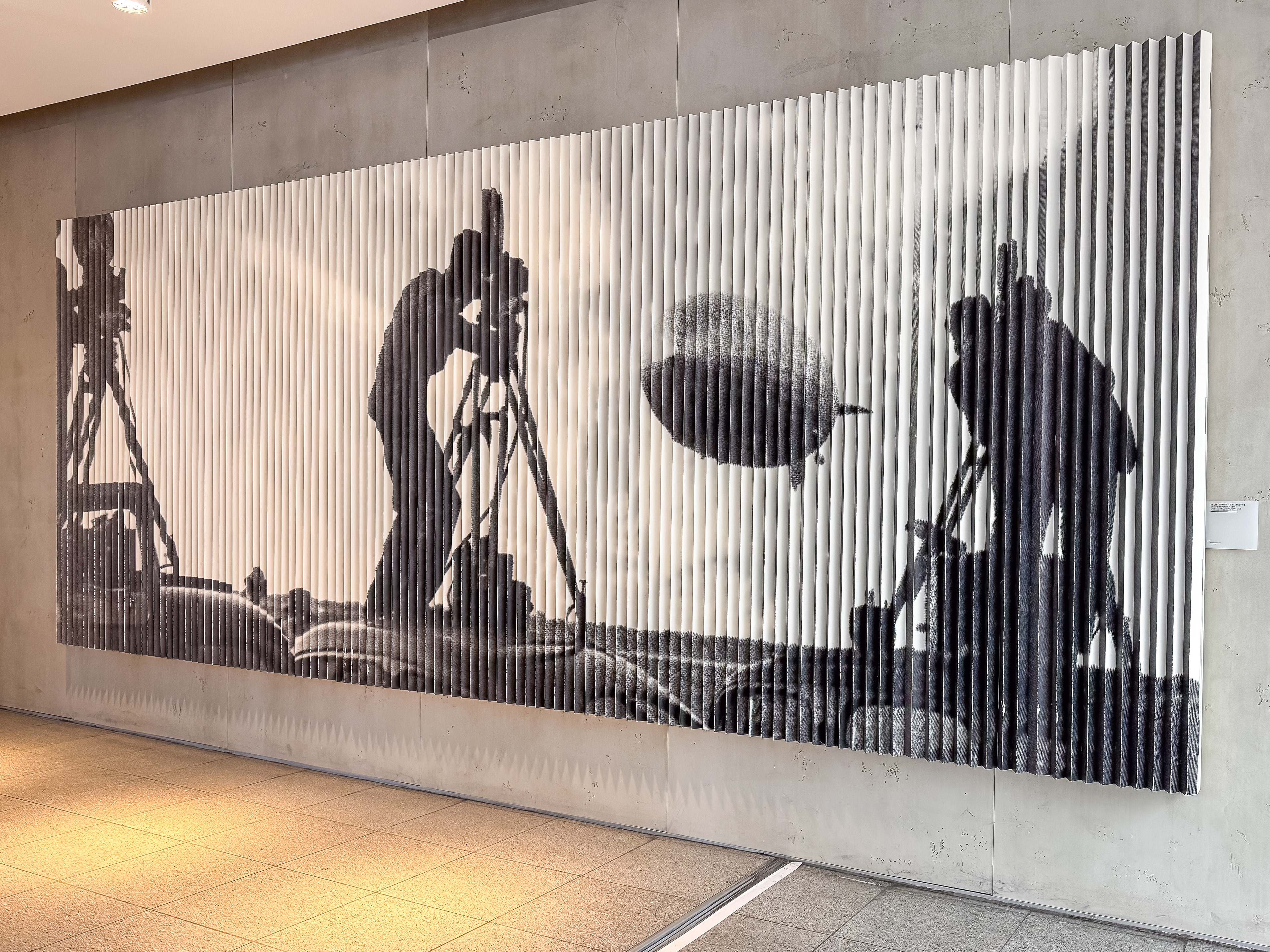
This was one of the first things you saw inside the museum. It's one artwork, but when you look at it from the right, you see the image above (the Hindenburg coming in for a landing); but when you move to the left of the image, the picture changes and you see the tragedy that followed.
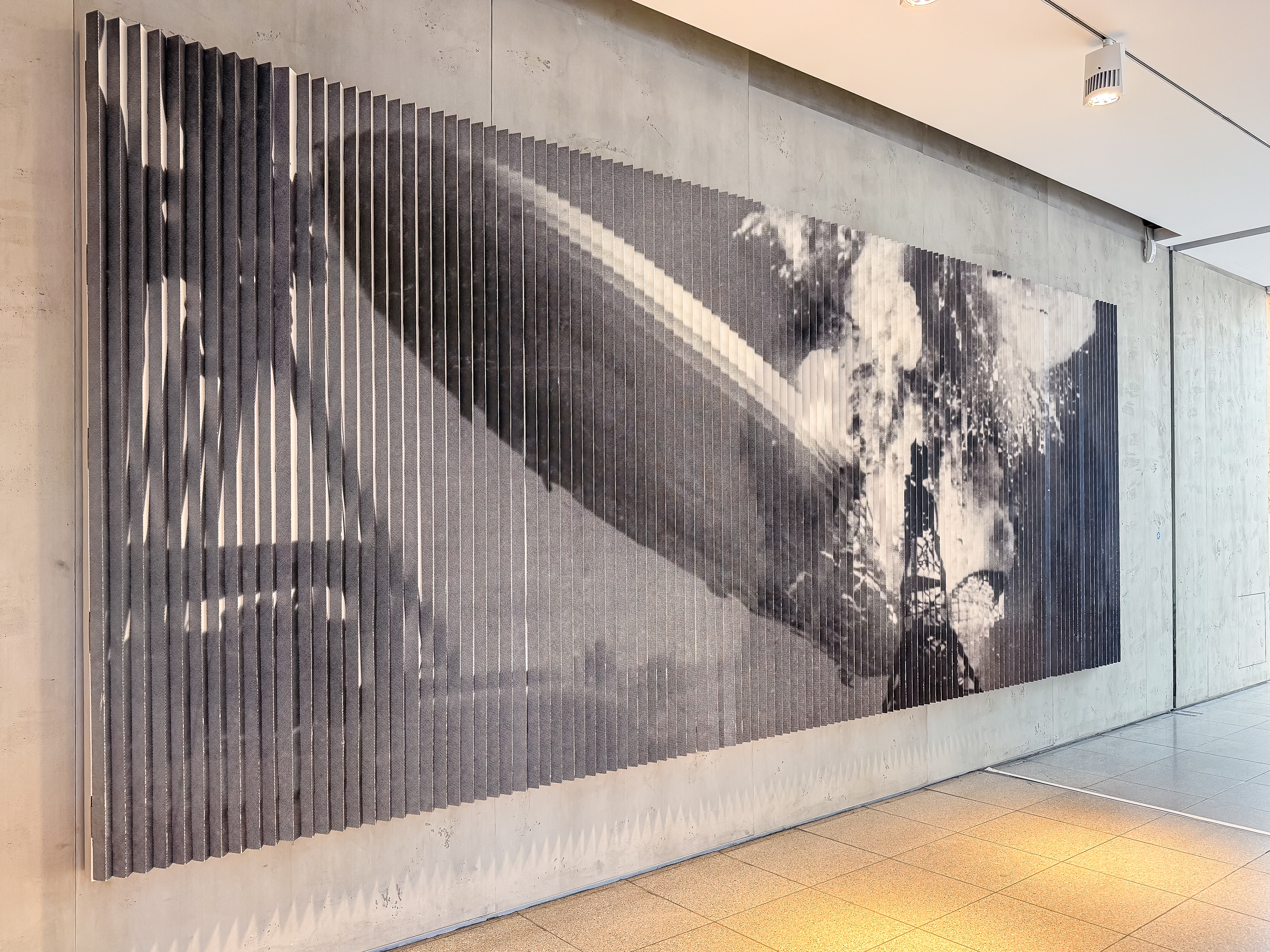
I didn't realize that the Hindenburg was one of a long line of zeppelin models over those early years of flight. And I sure didn't realize people bought tickets and flew on it to go to America.
The Hindenburg was originally supposed to be filled with helium, which was safe, but the United States had control of the most helium and refused to sell it to Germany. So they instead used hydrogen, a flammable gas. When the Hindenburg exploded in 1937 in New Jersey, it took less than a minute for it to burn up. It remains the largest flying object in history.
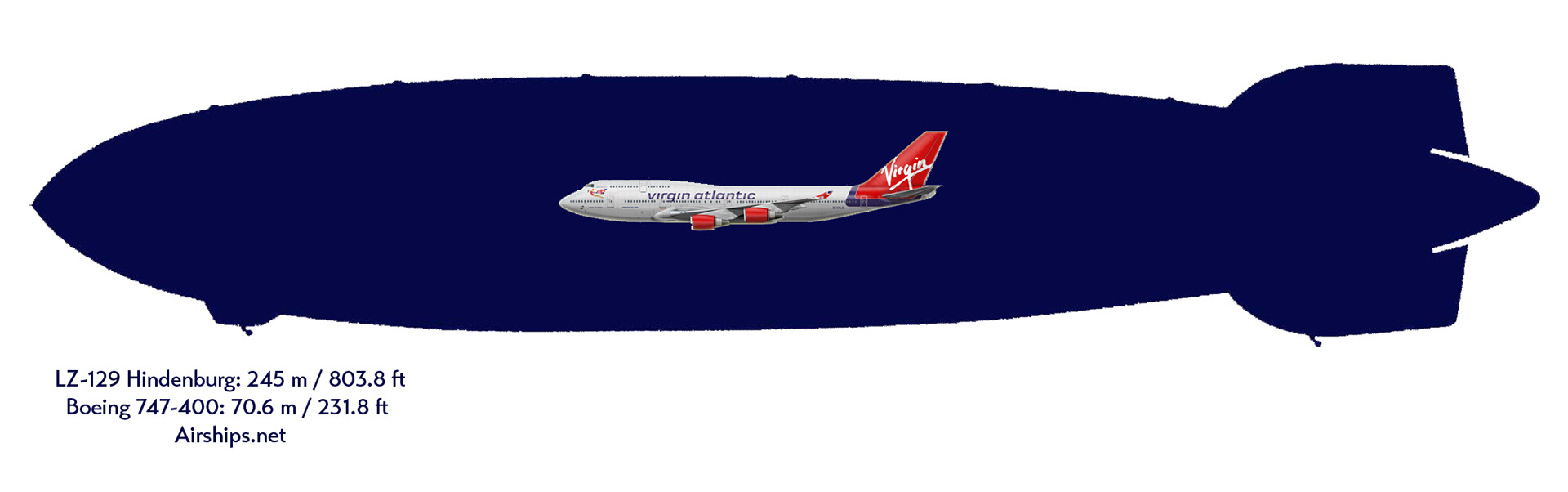
Even though the Hindenburg was massive in size (at 803.8 ft.), most of that was for the gas-filled balloon pockets required to make it fly. It could only carry 50-72 passengers, plus crew, so tickets to travel on it were very expensive. Tickets, during the Great Depression, were around $450, which today would be closer to $10,000.
But the passenger area featured nice sitting areas, sleeping quarters, kitchen, bathroom, and even a smoking lounge ... all the luxury conveniences of the time. There were windows in the passenger area so that people could look down at the scenery below them. The museum had recreated, to scale, a portion of the passenger areas so that you could get a feel for the space as it was.
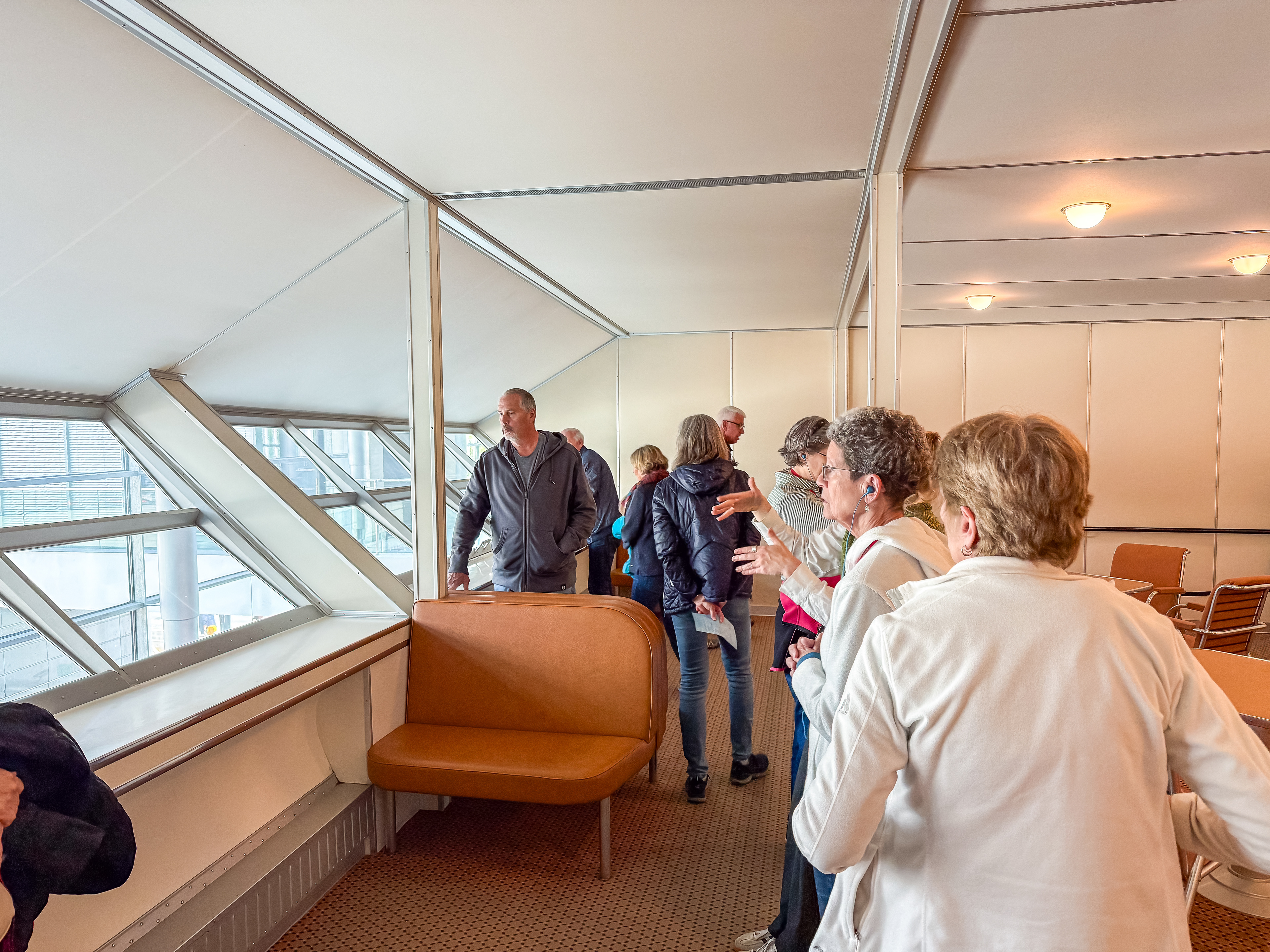
These would have been the windows that passengers on the Hindenburg used to view the ground as they flew over.
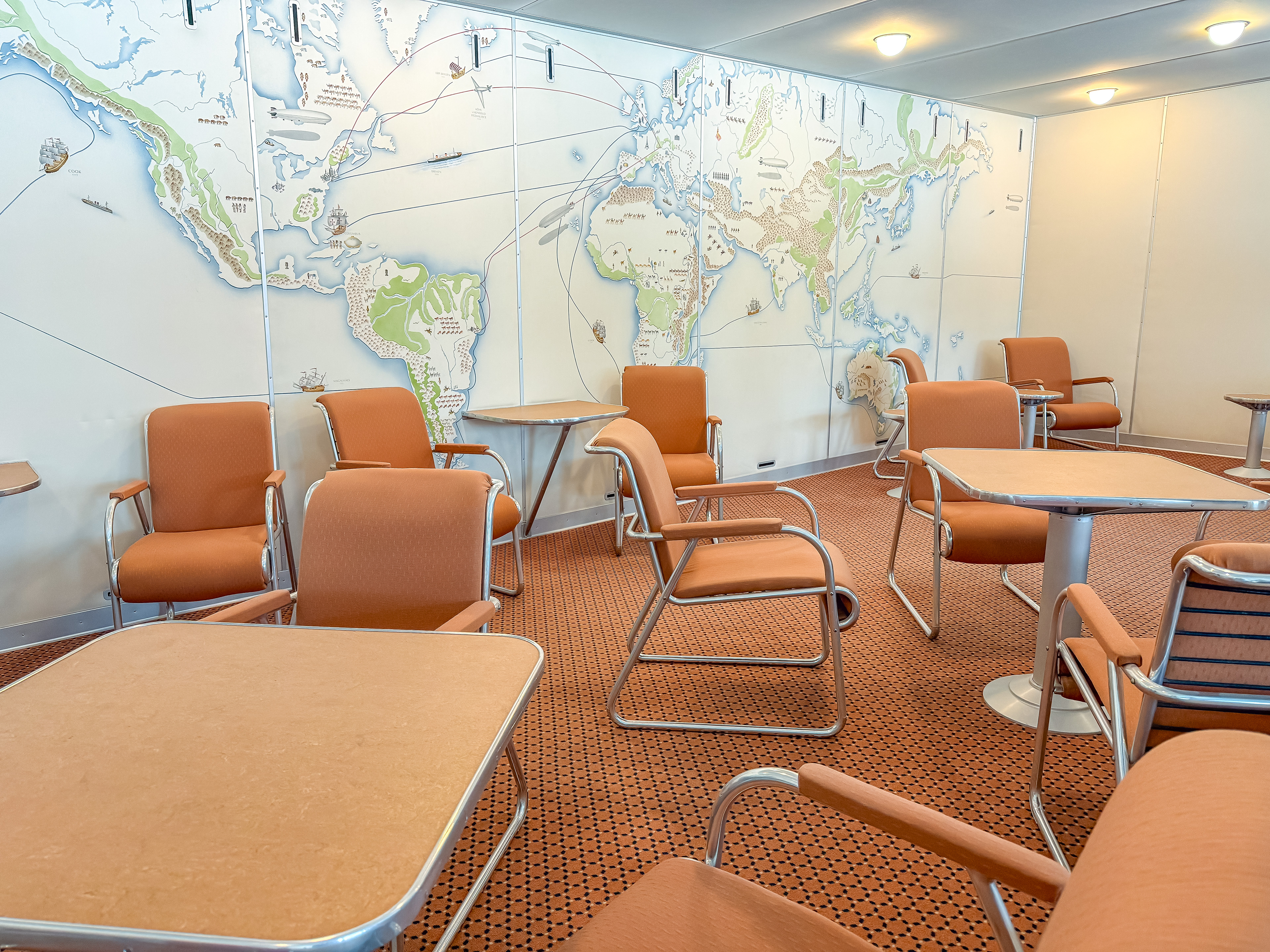
Most of the day, passengers would enjoy this lounge where they could eat, chat, or play games during flight.
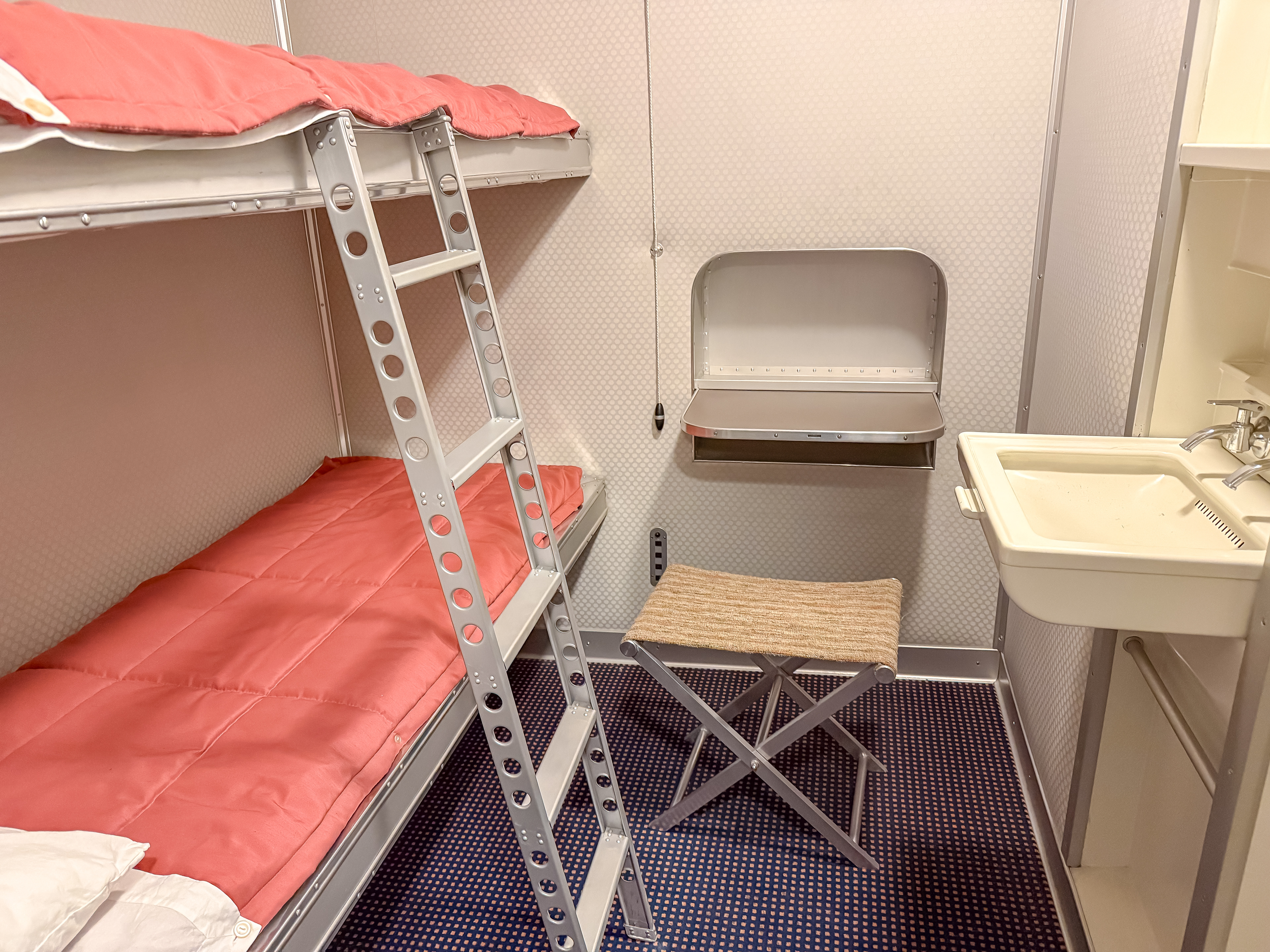
Sleeping quarters were small but adequate and even included a sink. Bathrooms were in one spot down the hall.
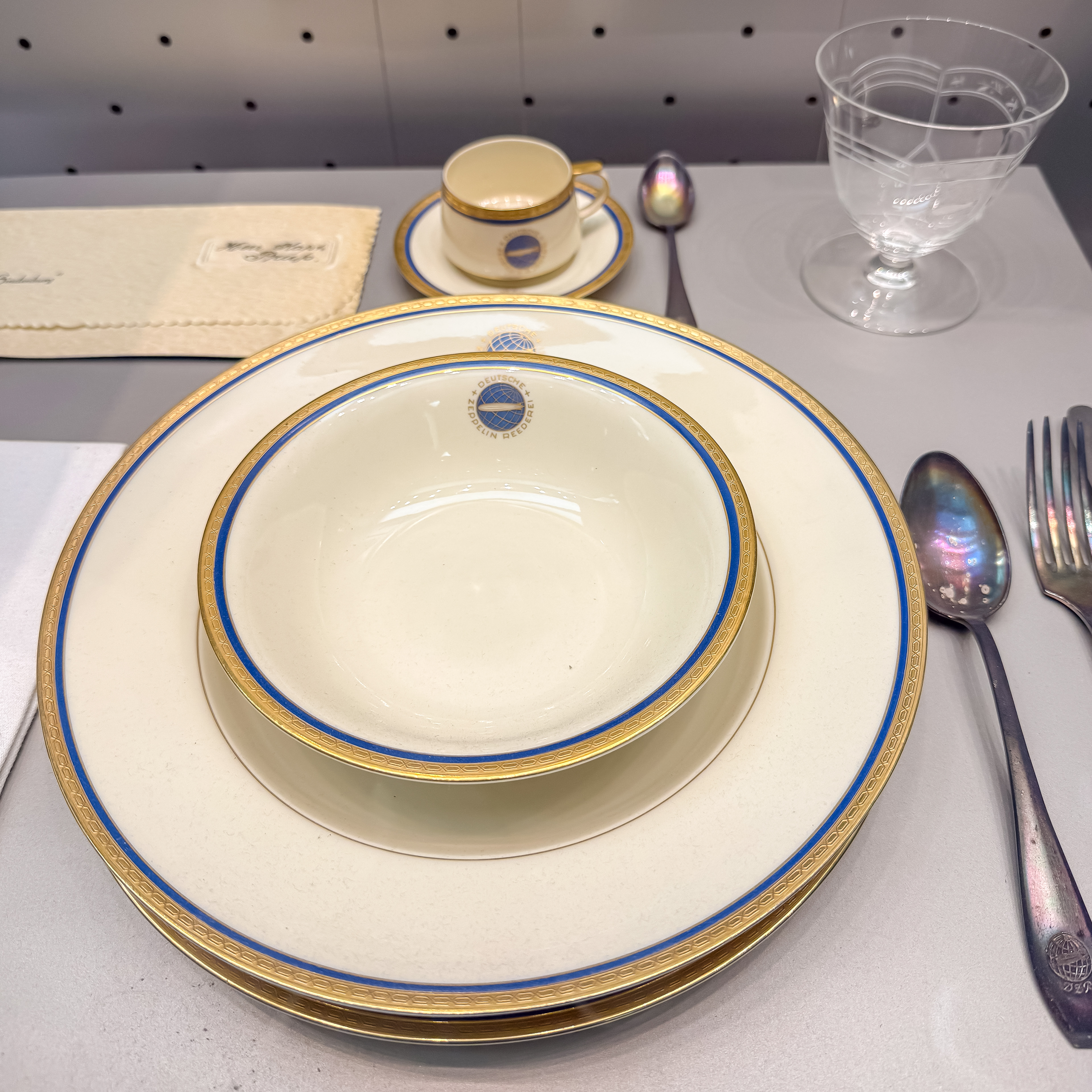
Here is a place setting that would have been used.
The Hindenburg was the second passenger zeppelin. The previous one, Graf Zeppelin, had made 590 successful flights all over the world. The Hindenburg itself made a total of 63 flights, including 10 roundtrip flights to America, in 1936. Its final, fatal flight from Frankfurt, Germany, to Lakehurst, New Jersey, was in May 1937. Of the 97 people onboard at the time of the crash, 62 survived ... mainly by jumping out of the windows and being helped to safety by people on the ground.
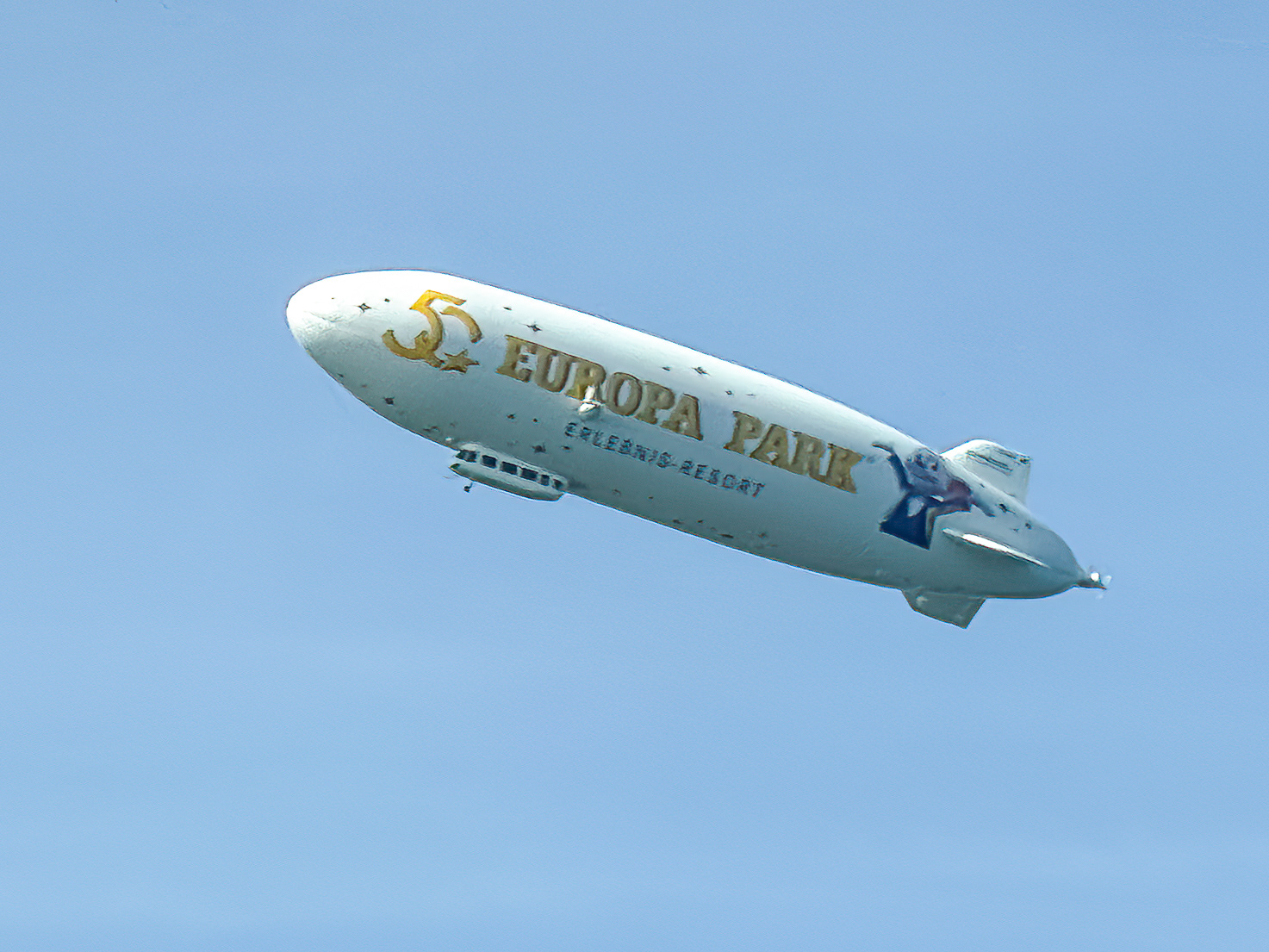
The zeppelins resurfaced again in the late 1990s with a smaller sized Zeppelin NT (new technology). You can book a ride on one right in Friedrichshafen (a 30 minute flight costs 350 euros or $406 USD). The company is the same one who manufactures the Goodyear blimps!
On our bus ride the following day, we saw one in the sky! ....
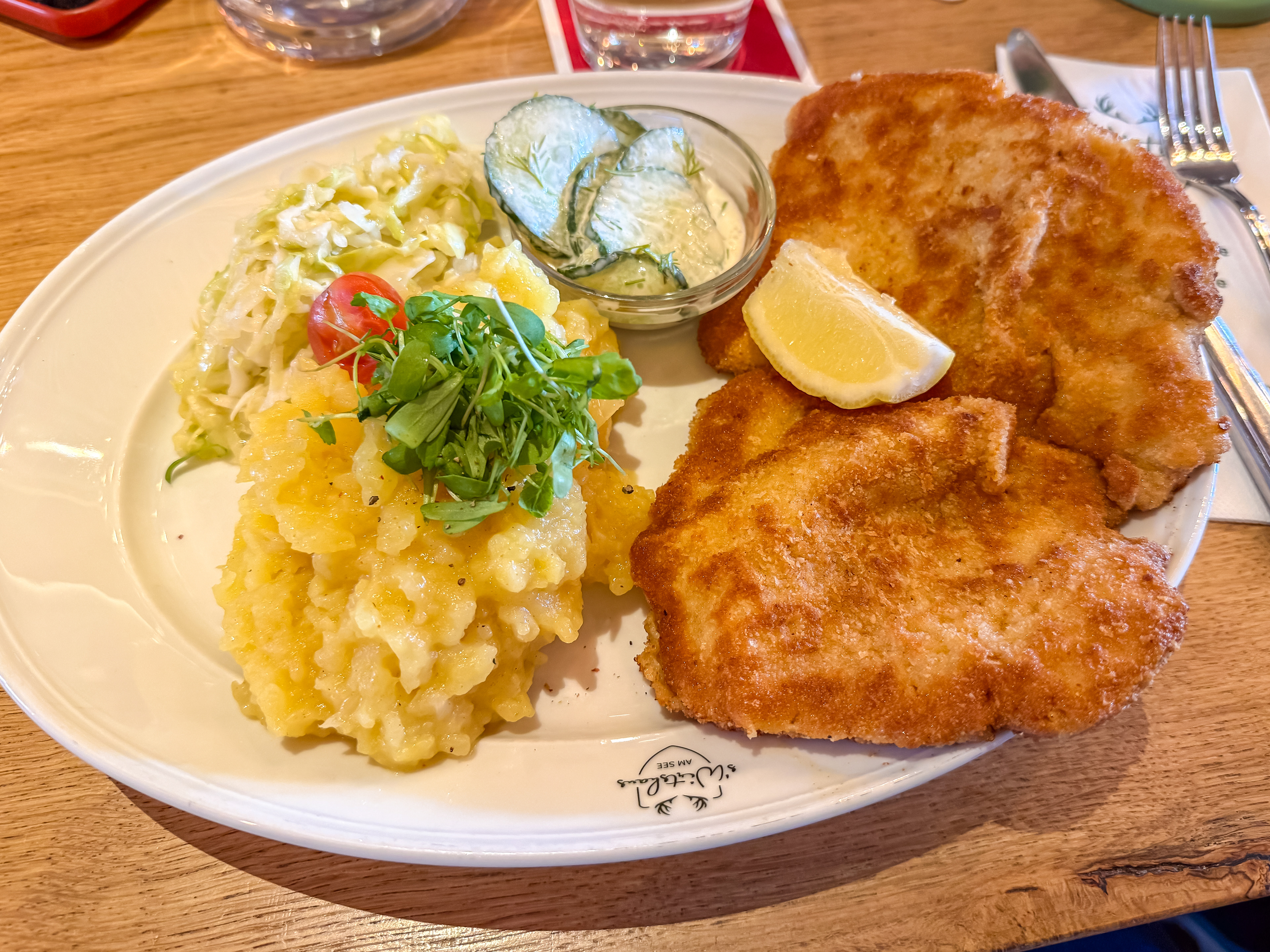
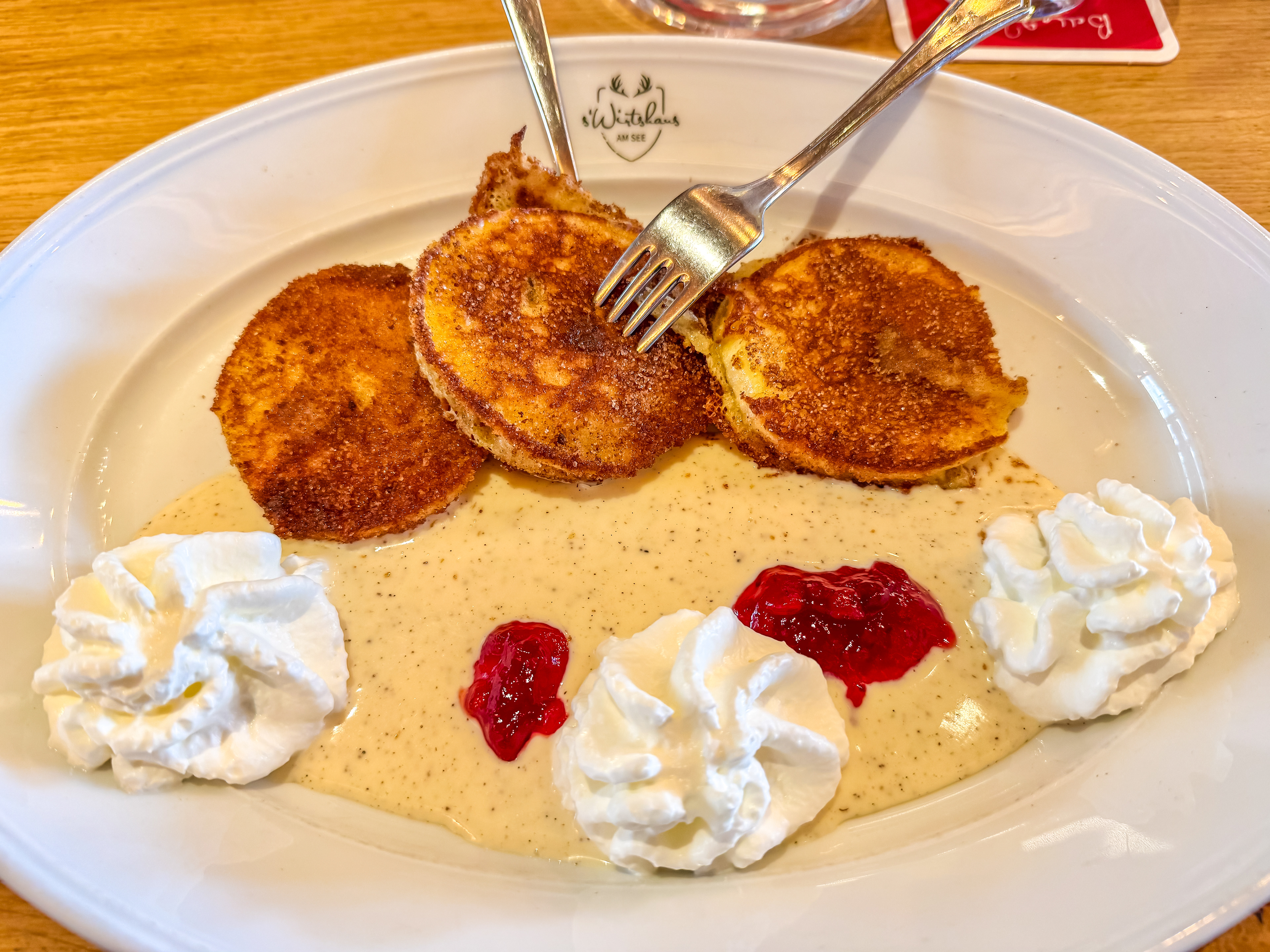
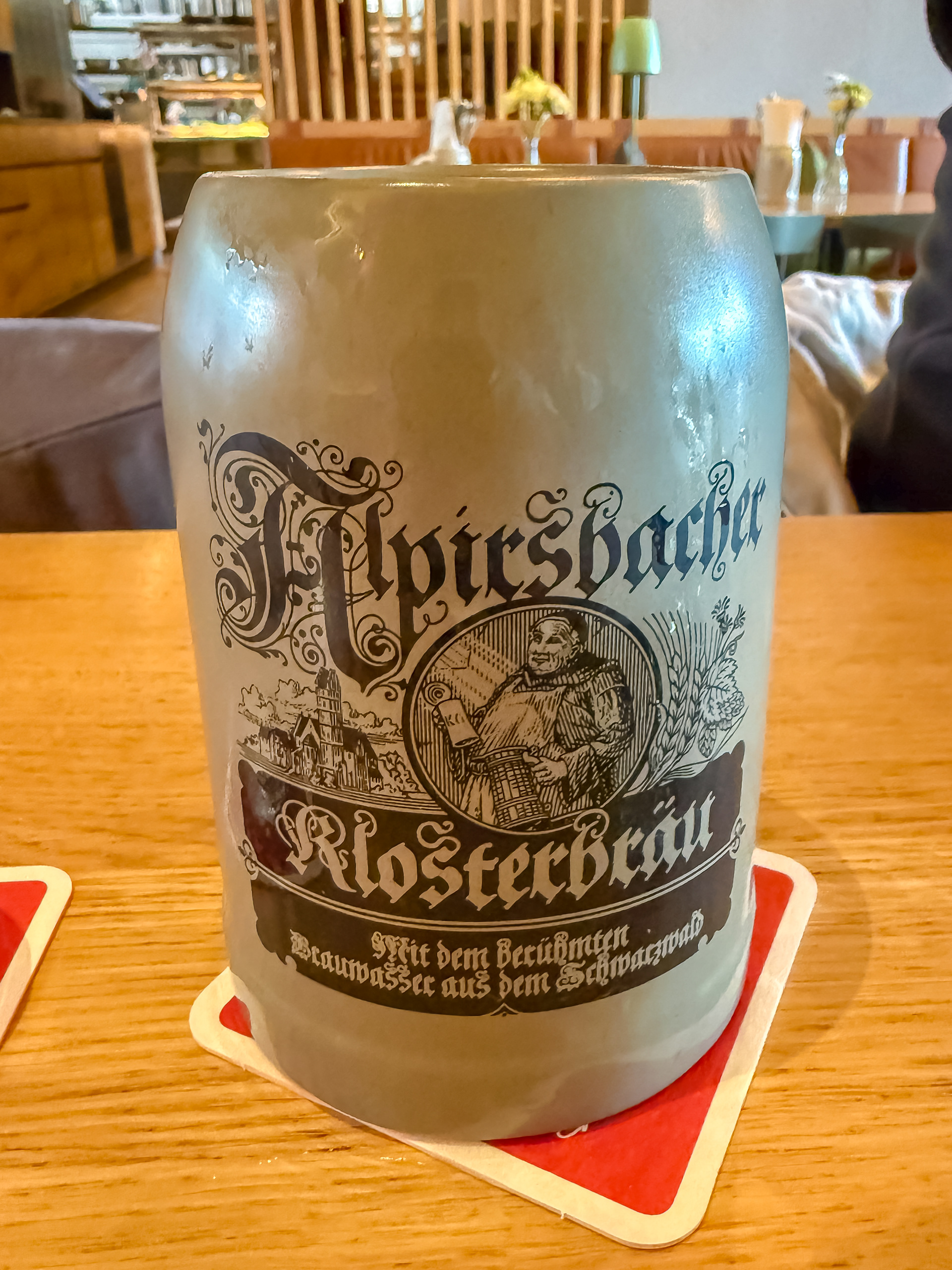
After our tour through the Zeppelin museum, we walked just down the riverfront to the s'Wirtshaus Am See (am see means 'by the lake') restaurant. This was an included Gate 1 group meal and everyone was served their first dish of schnitzel, which is a flattened fried piece of meat (typically veal, pork, or chicken). It was delicious!! They served it with a potato dish and coleslaw. We also all got a dessert of small apple-flavored pancakes and sweet cream. I forgot the name of that one. All so good though!
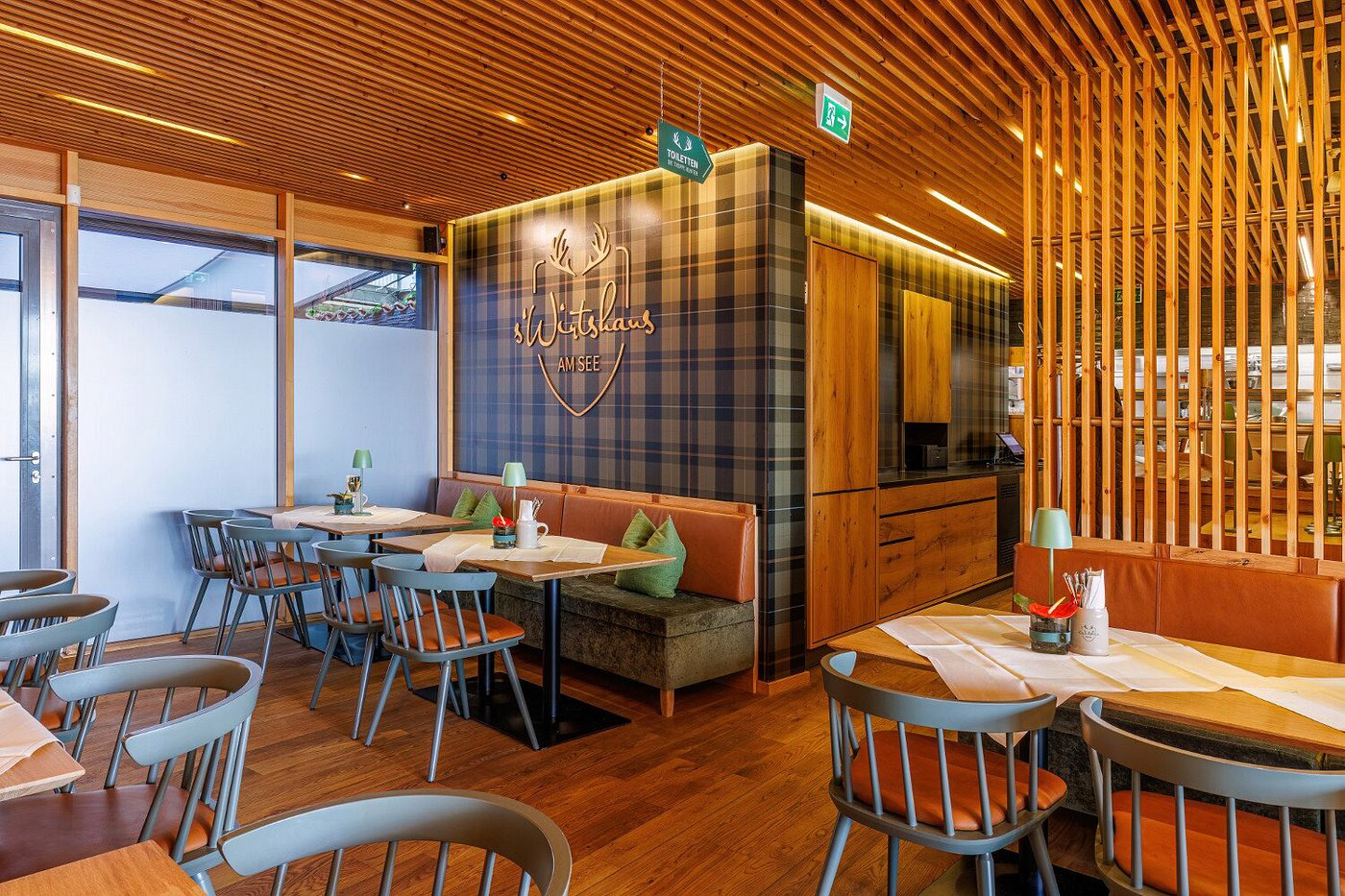
This is a photo off of the internet, because I didn't take one, but this is from where we sat in the restaurant.
After lunch we had a couple of hours to just walk around the lakefront, see the park, or shop. Jim and I walked for a bit, but there wasn't too much that appealed to us. That area was pretty modern with tourist shops and restaurants. It was warm out, so we preferred to find a place to sit in the shade. We ended up touring their library (they even had an elevator in there), and then finding a spot outside to sit for a bit. While we would have rather gone on back to Bregenz to spend the afternoon (we were so full from lunch, and sleepy too), our group had tickets for a boat ride on Lake Constance, from there in Friedrichshafen, back to Bregenz where our hotel was.
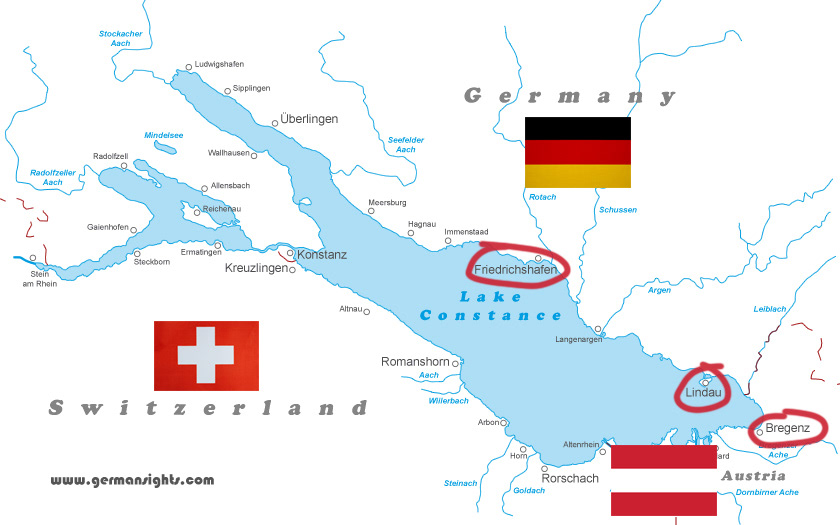
Lake Constance, also known as Bodensee in Germany, shares borders with three countries: Germany has 107 miles of shoreline; Switzerland has 45 miles; and Austria has 17 miles. It's Central Europe's third largest freshwater lake and is part of the Rhine River. These are the cities (circled above) that we visited during our two-night stay in Bregenz.
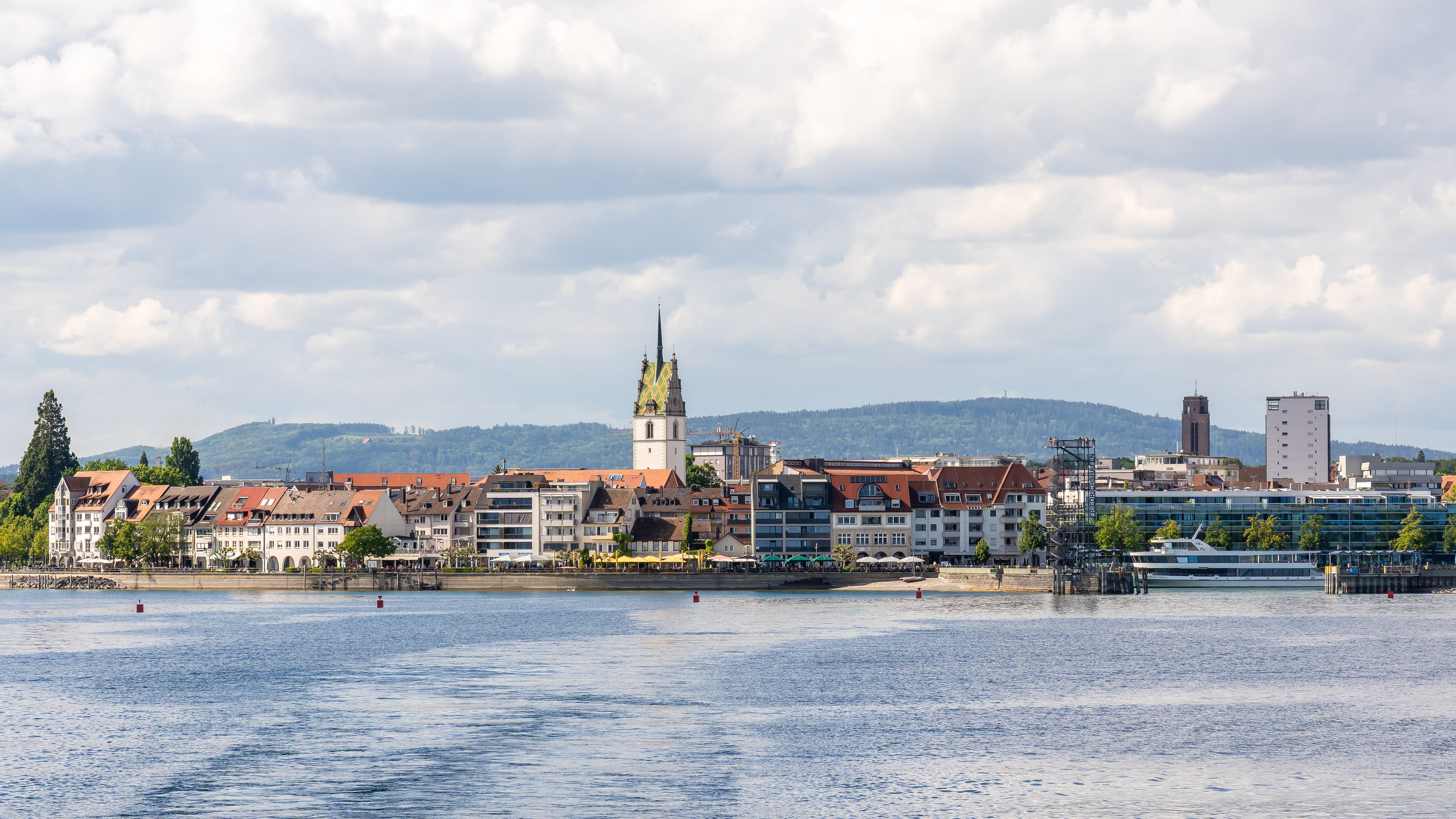
And the boat ride was nice, for sure. I'm glad we did it. The weather was perfect for it! We all sat on the upper deck and still had partial shade. The boat went along the coastline, so there were several good photo opportunities. We also stopped at a few places for people to get on or off, finally docking in Bregenz about 6:30 pm.
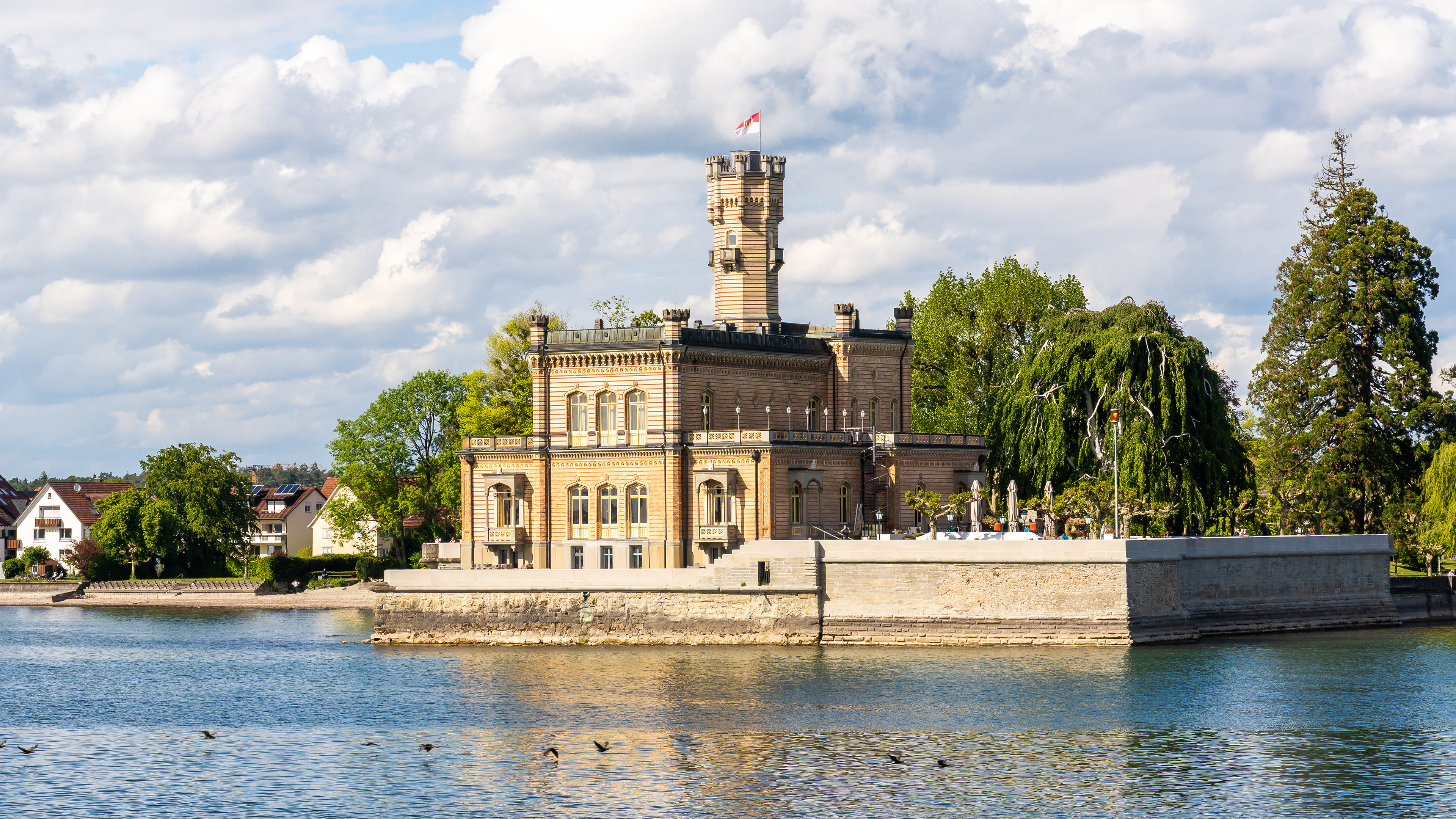
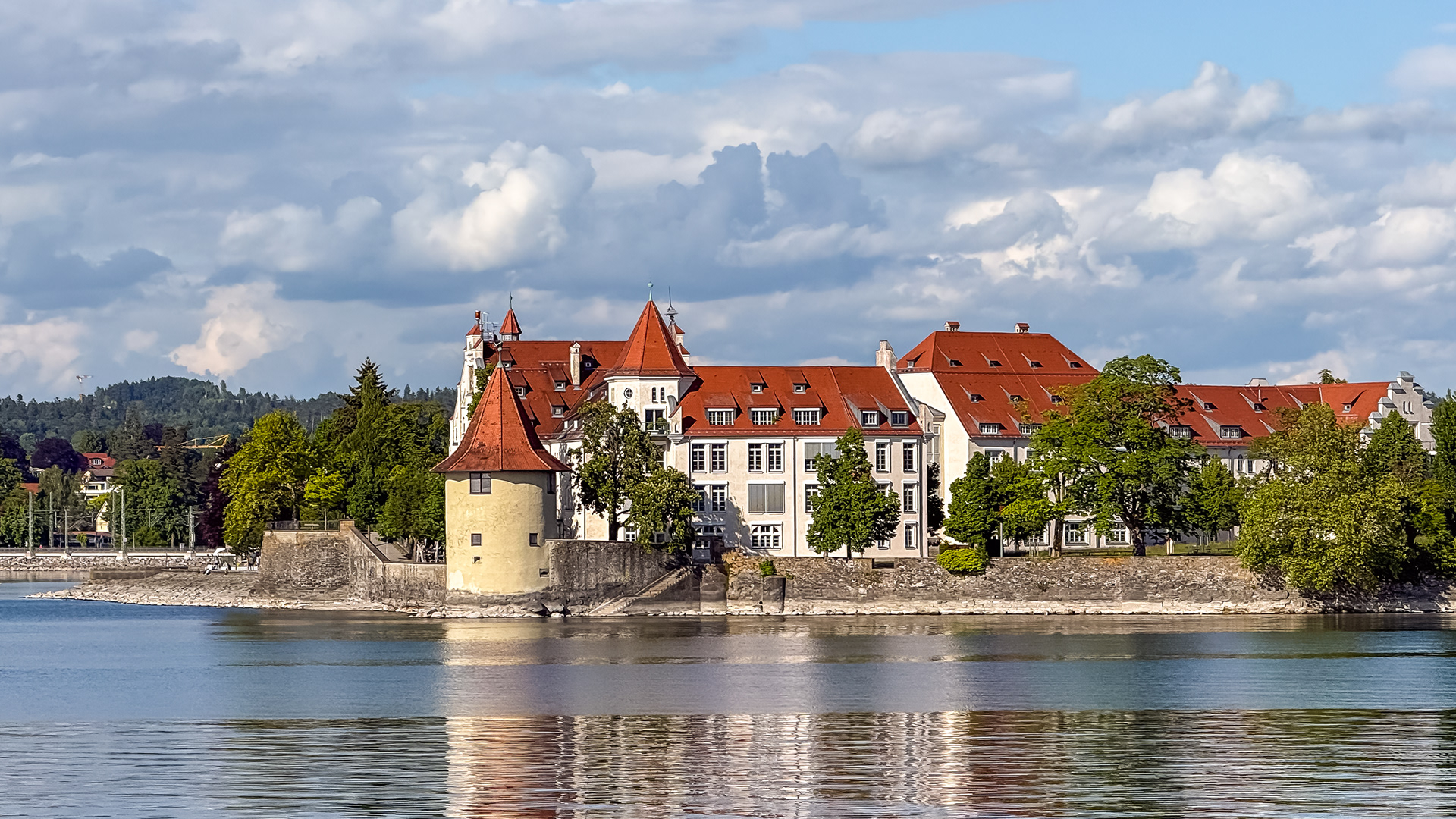
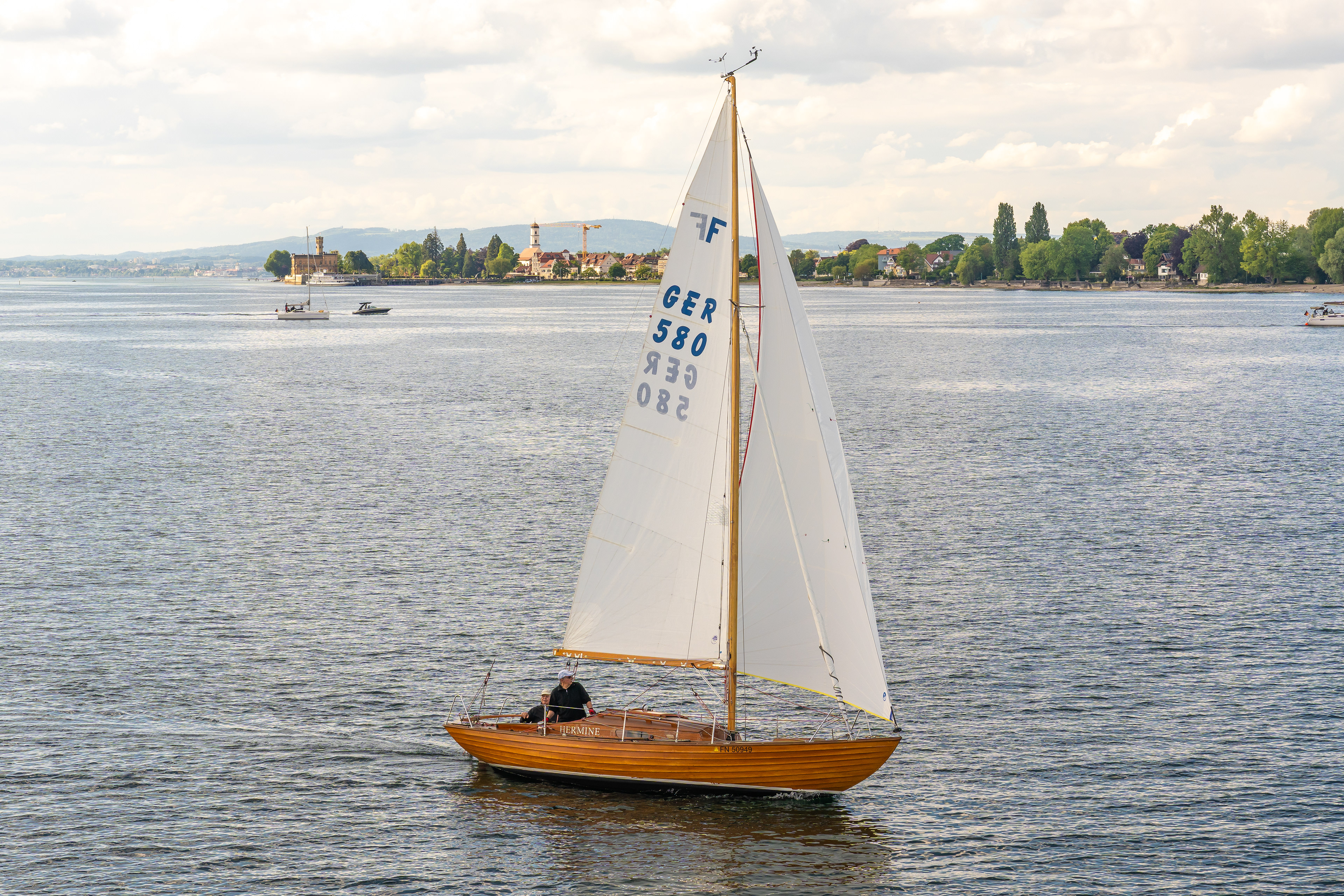
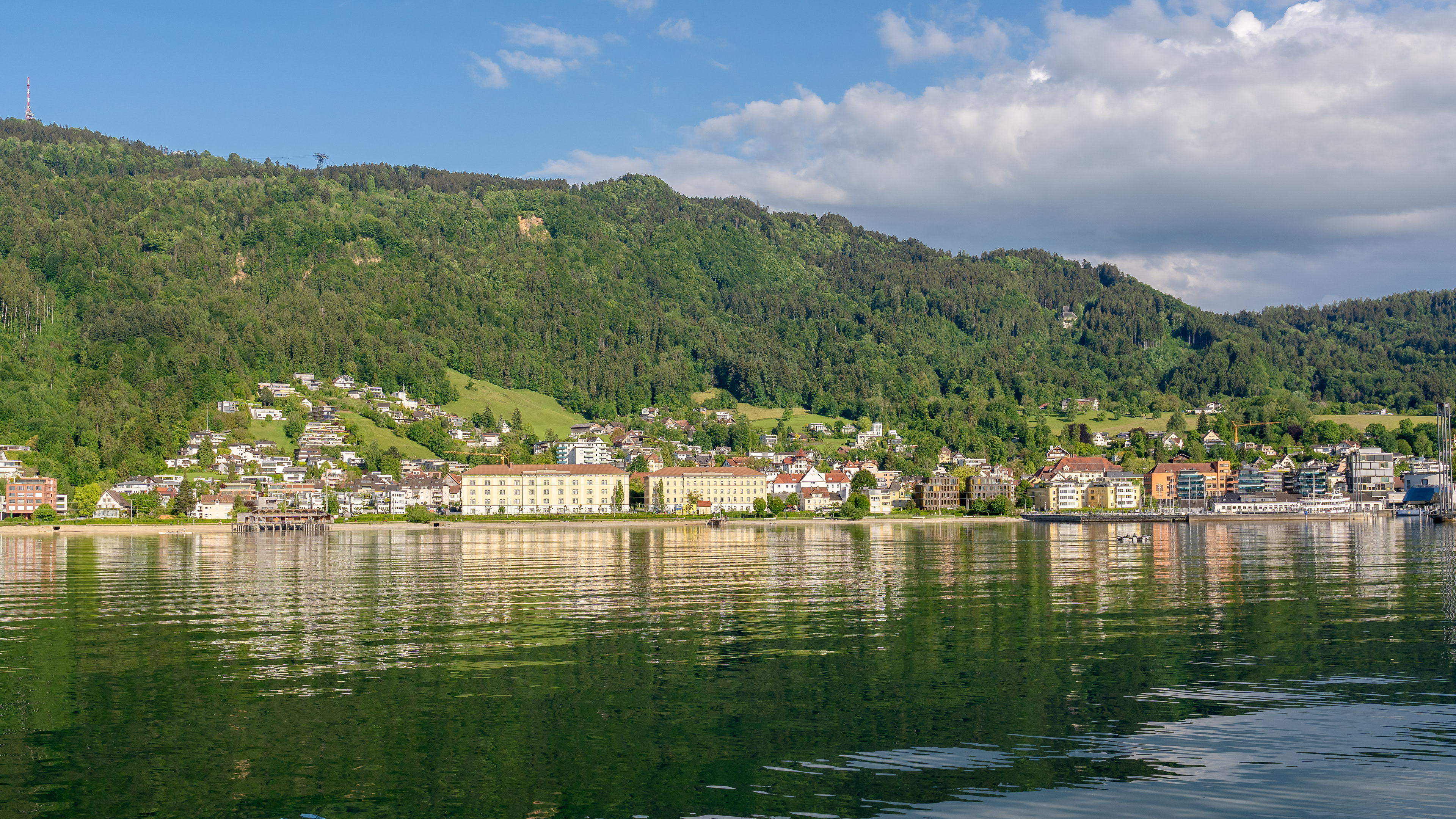
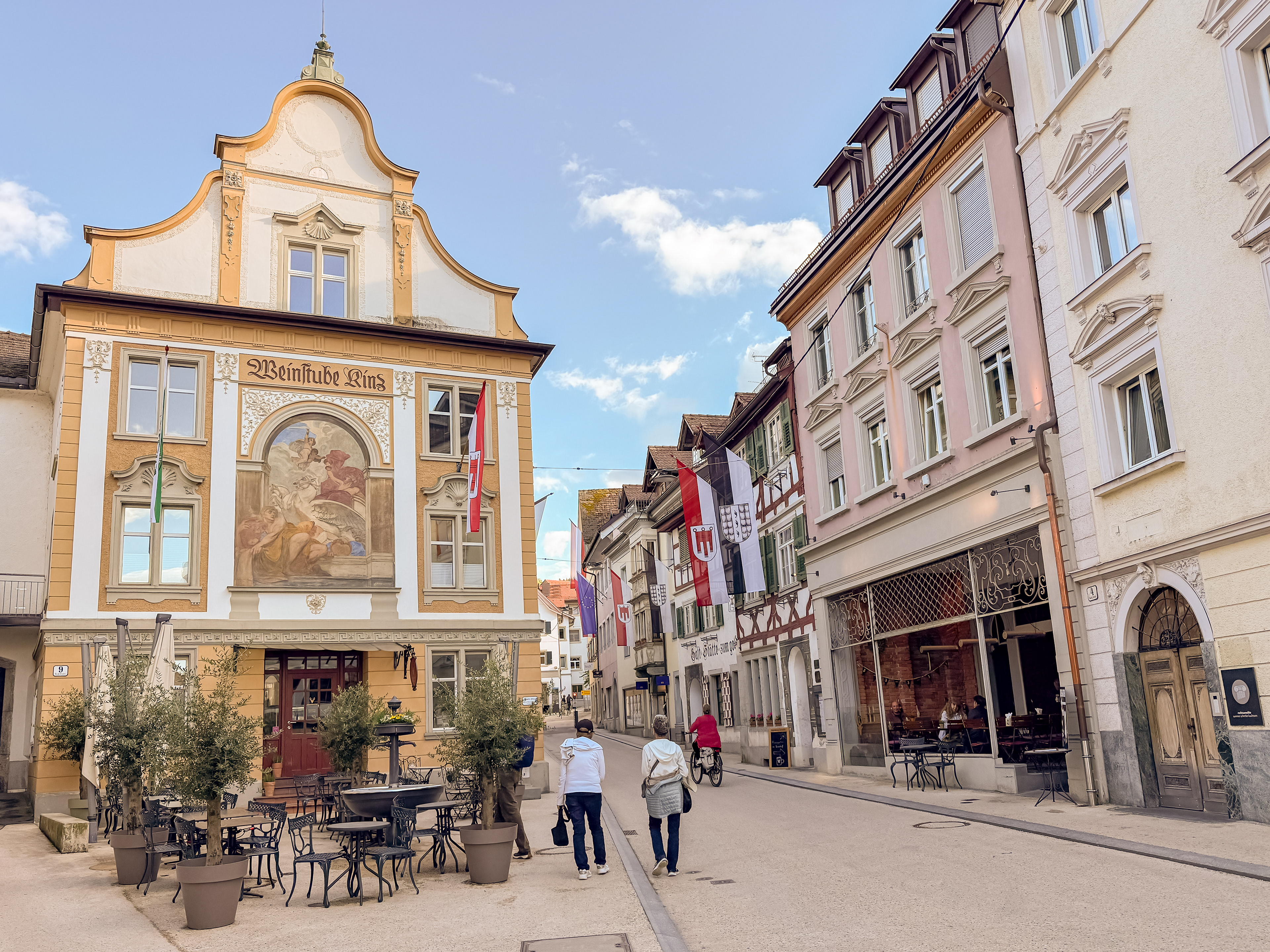
Arriving back in Bregenz, our Tour Director Farid took us on a walk through the city to point out restaurants and highlights. Dinner was on our own tonight and there were lots of choices. Jim and I were still pretty full from lunch, so we walked with them a bit through the town and then back to the hotel for a rest and refresh.
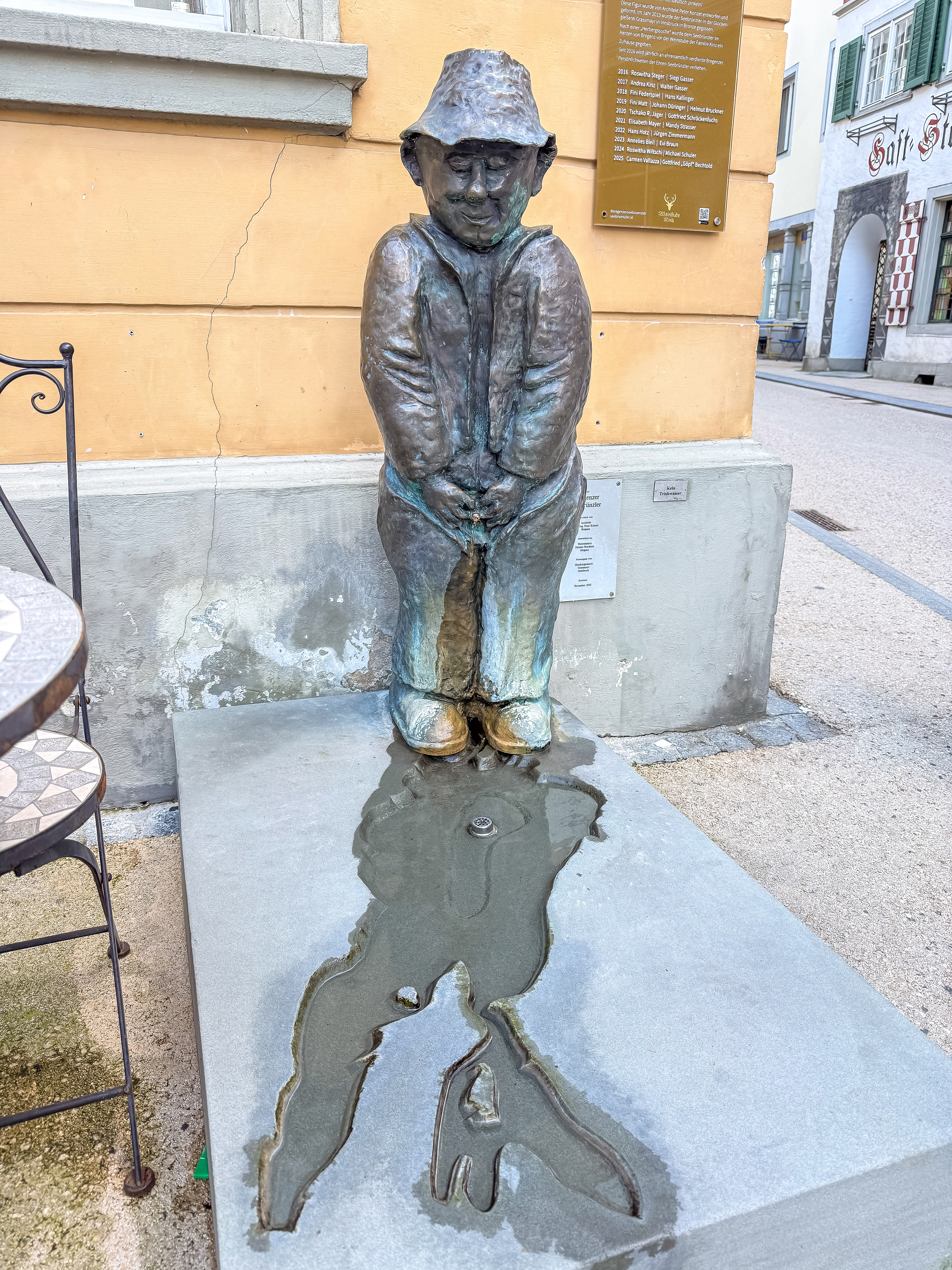
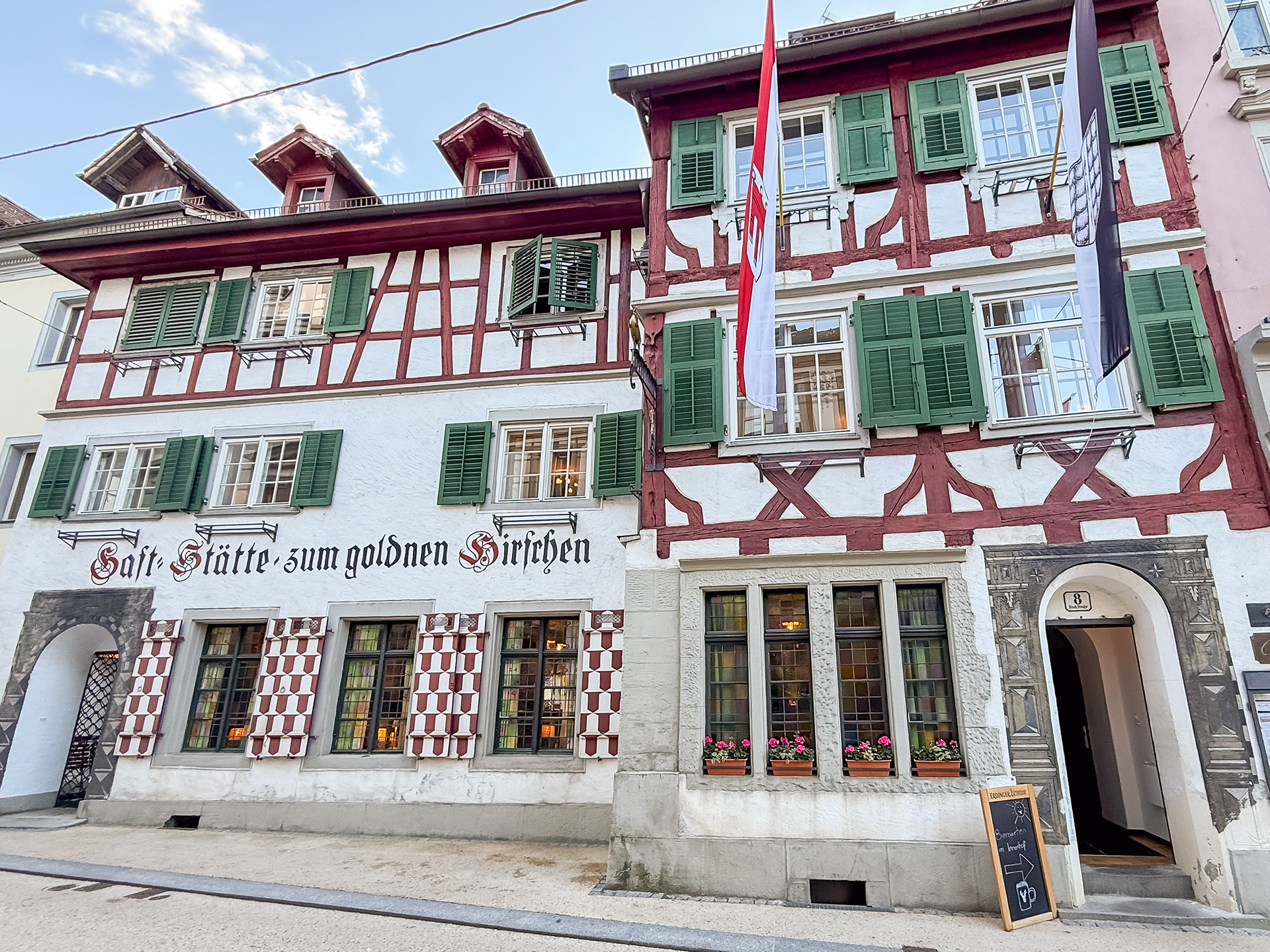
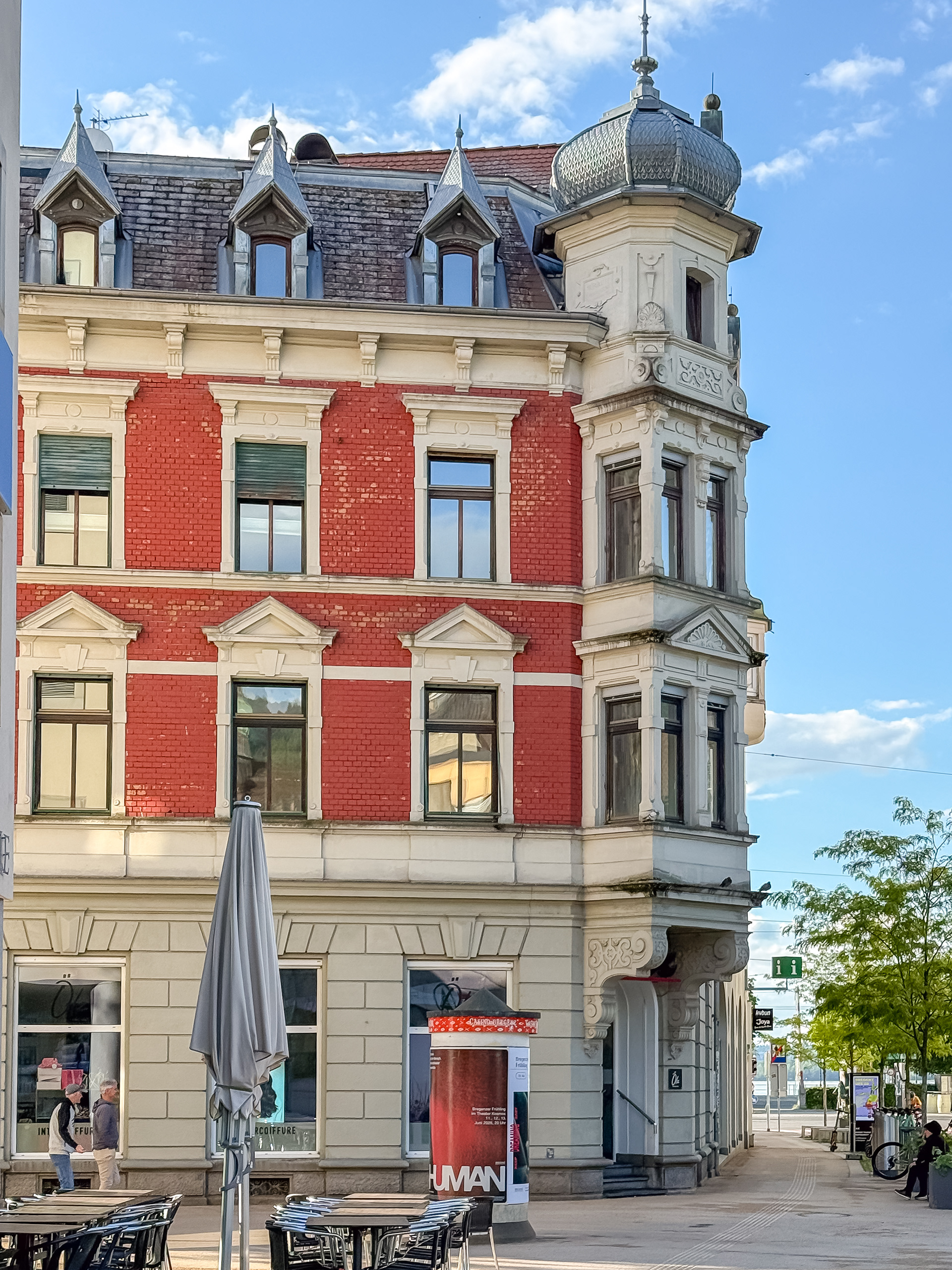
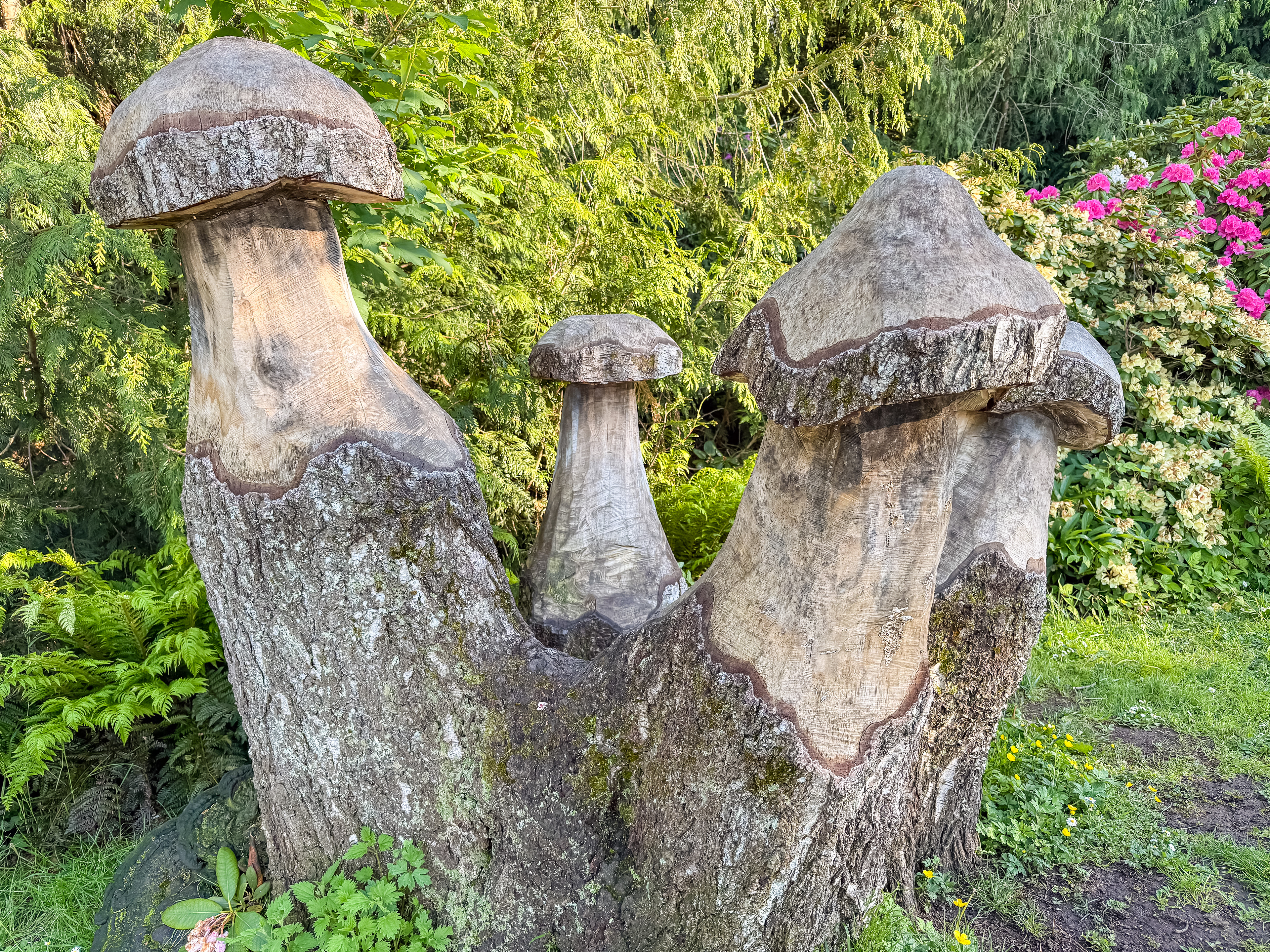
The sun stayed up quite a long time over there and it wasn't fully dark til just after 10 pm. I thought that since were were on the lake, it would be a good chance to see the sunset, have an easy stroll along the waterfront, and get some late dinner.
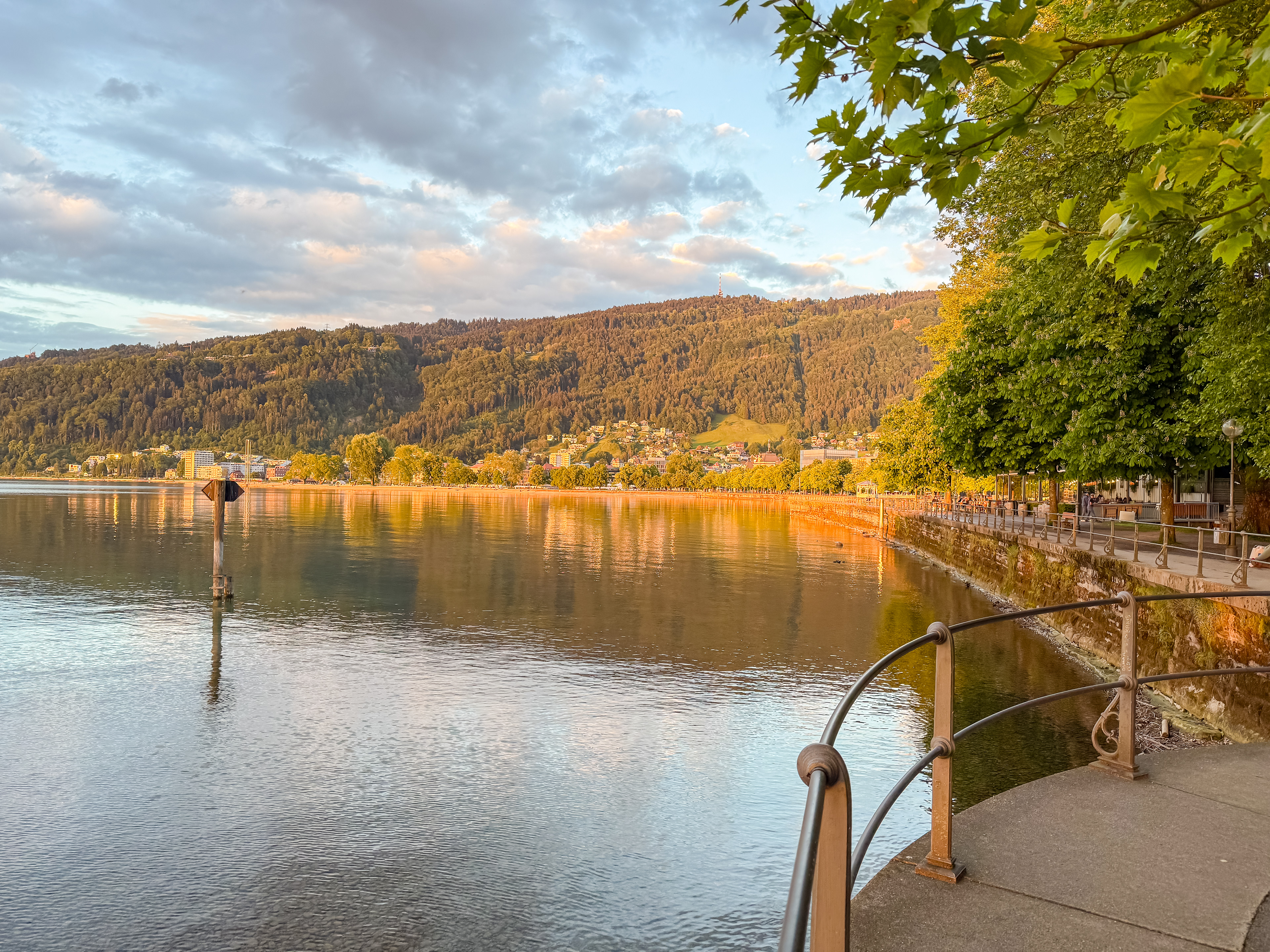
This is from the paved sidewalk along the lake. It was SO pretty out there. To the right of the photo, just behind this big green leafy tree, is the restaurant where we ate dinner. We had a window seat inside and it was a really nice spot to enjoy the evening.
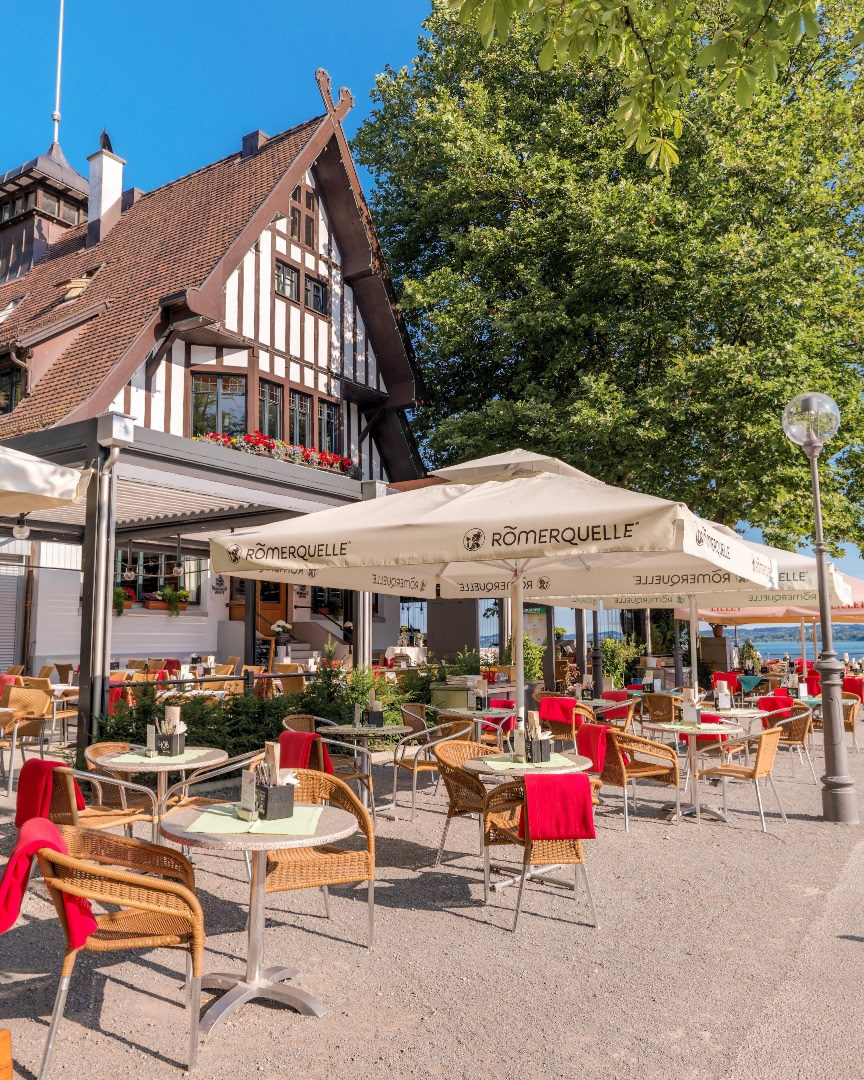
Another "borrowed" internet photo since I failed to take one!
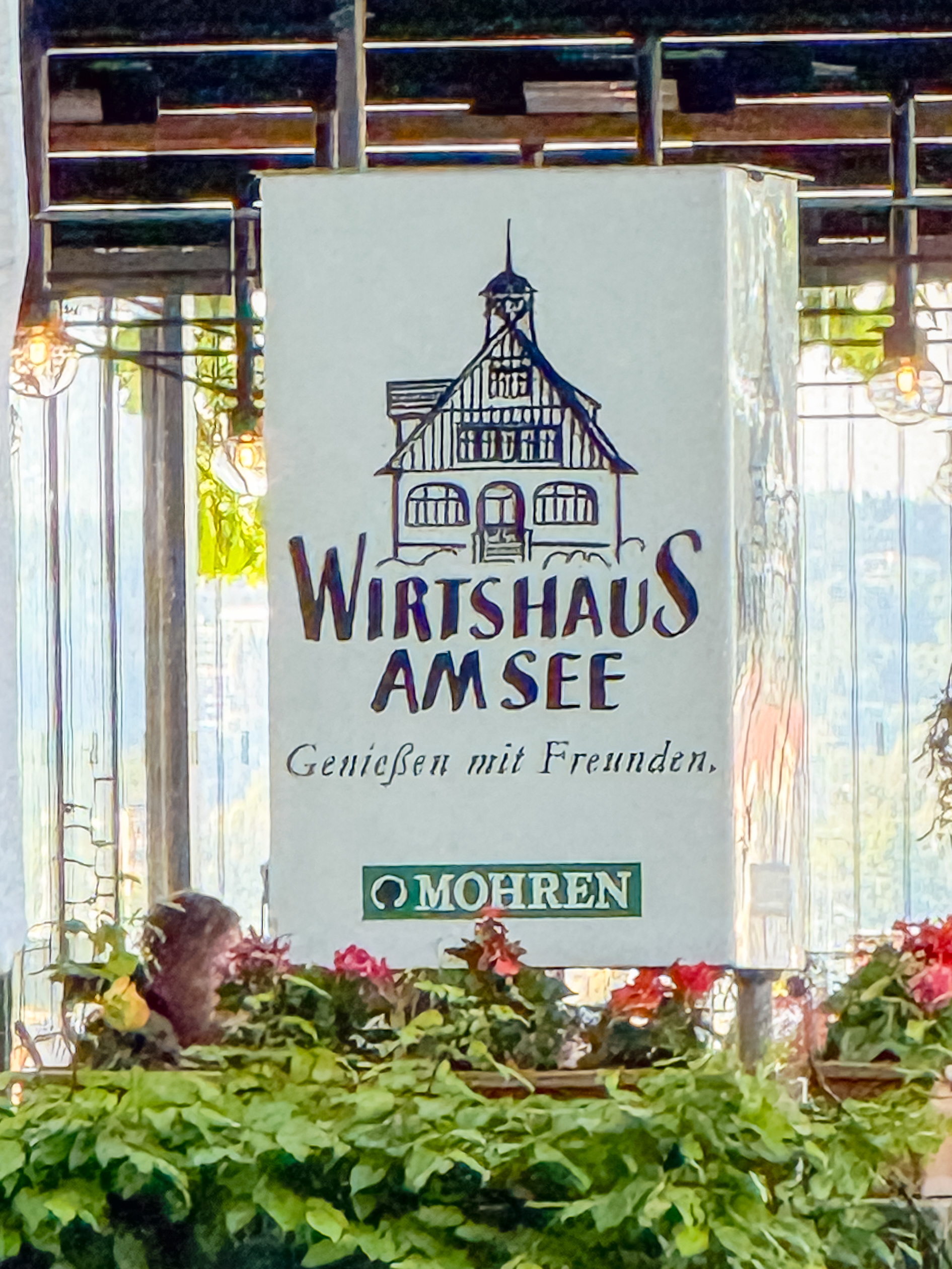
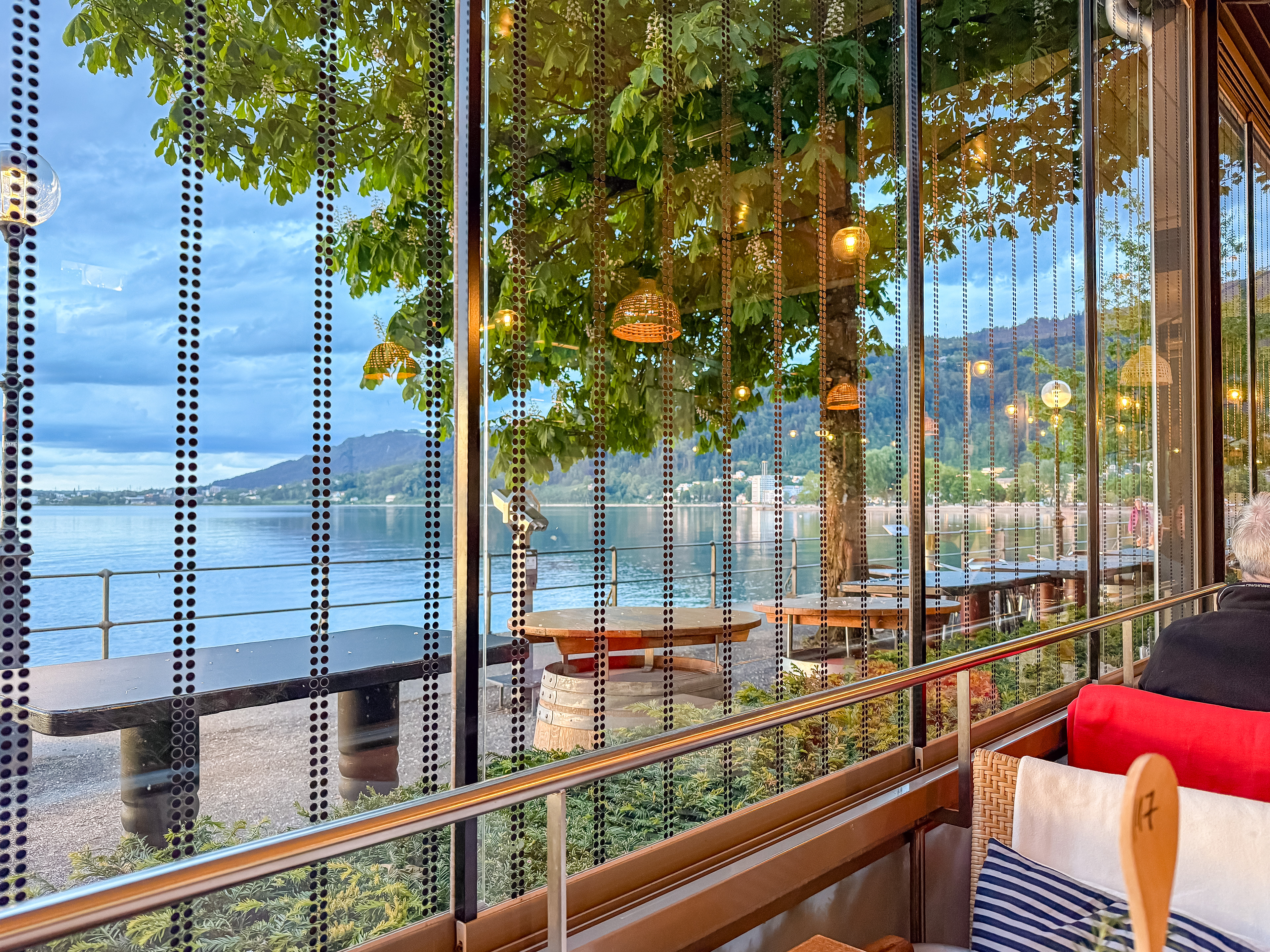
The view was great, as was the meal. I'm thinking this black dot decor on the windows is to keep birds from hitting the glass.
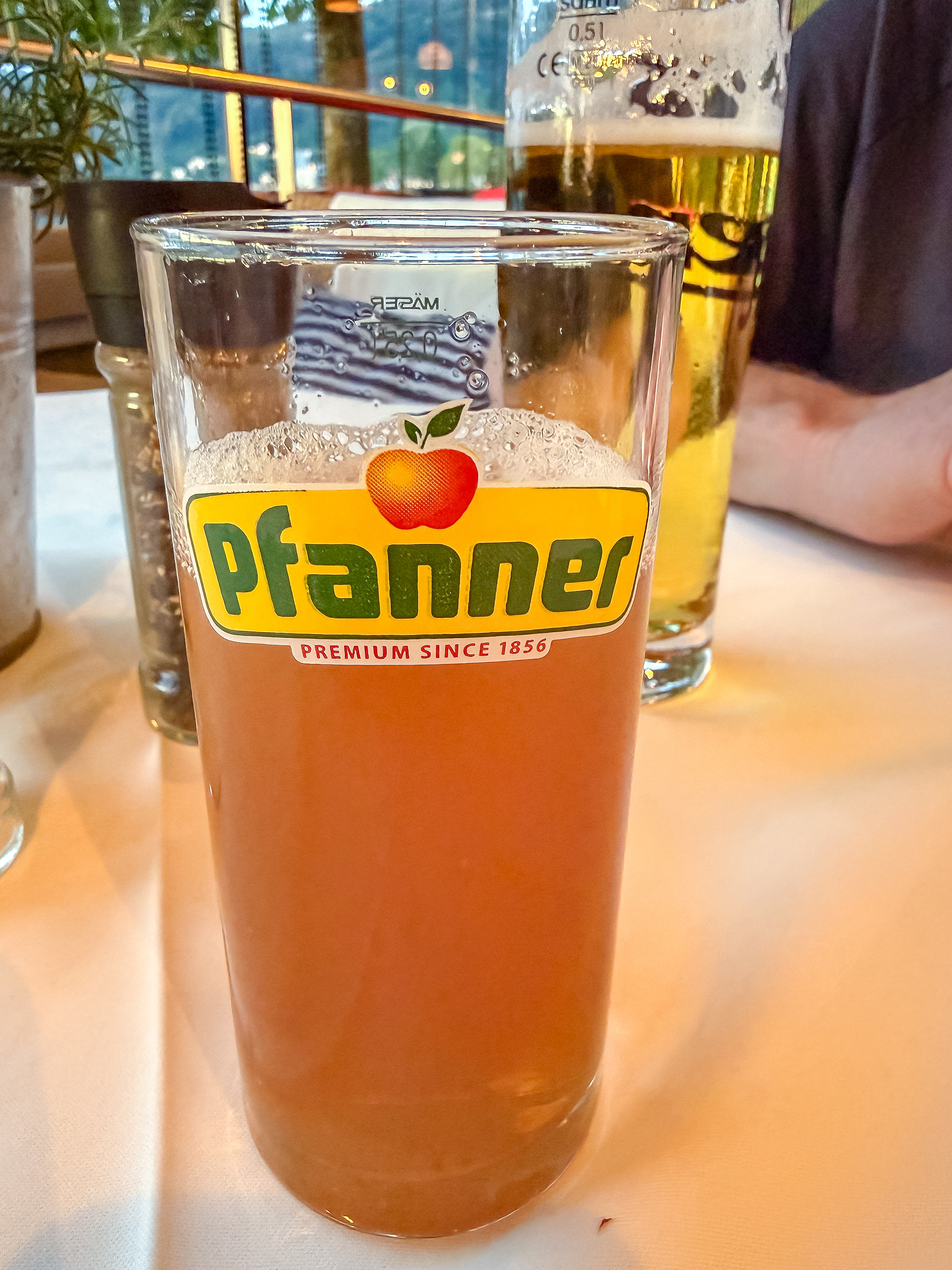
I could only find peach "ice tea" over there. It was tolerable, but not my first choice.
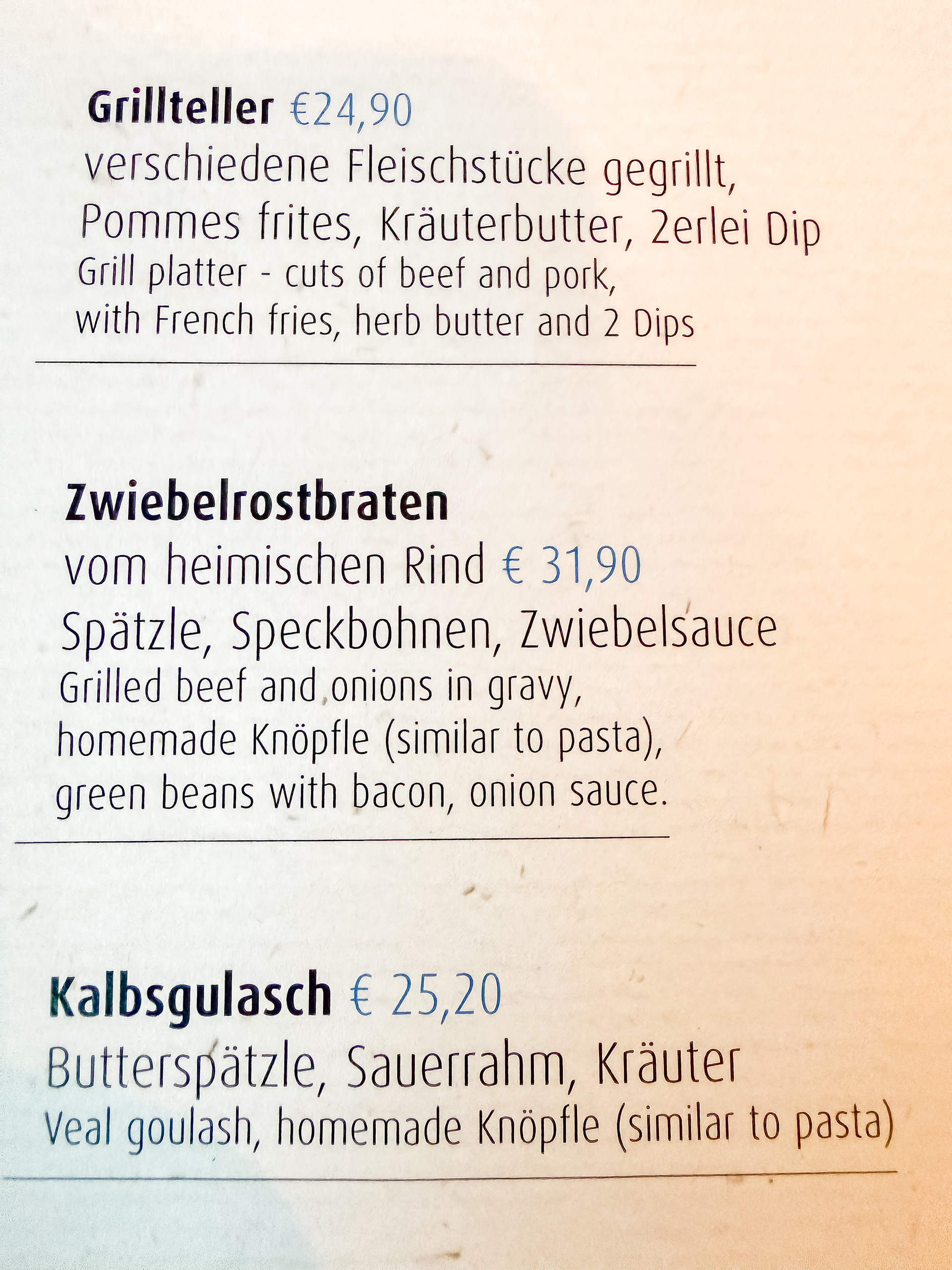
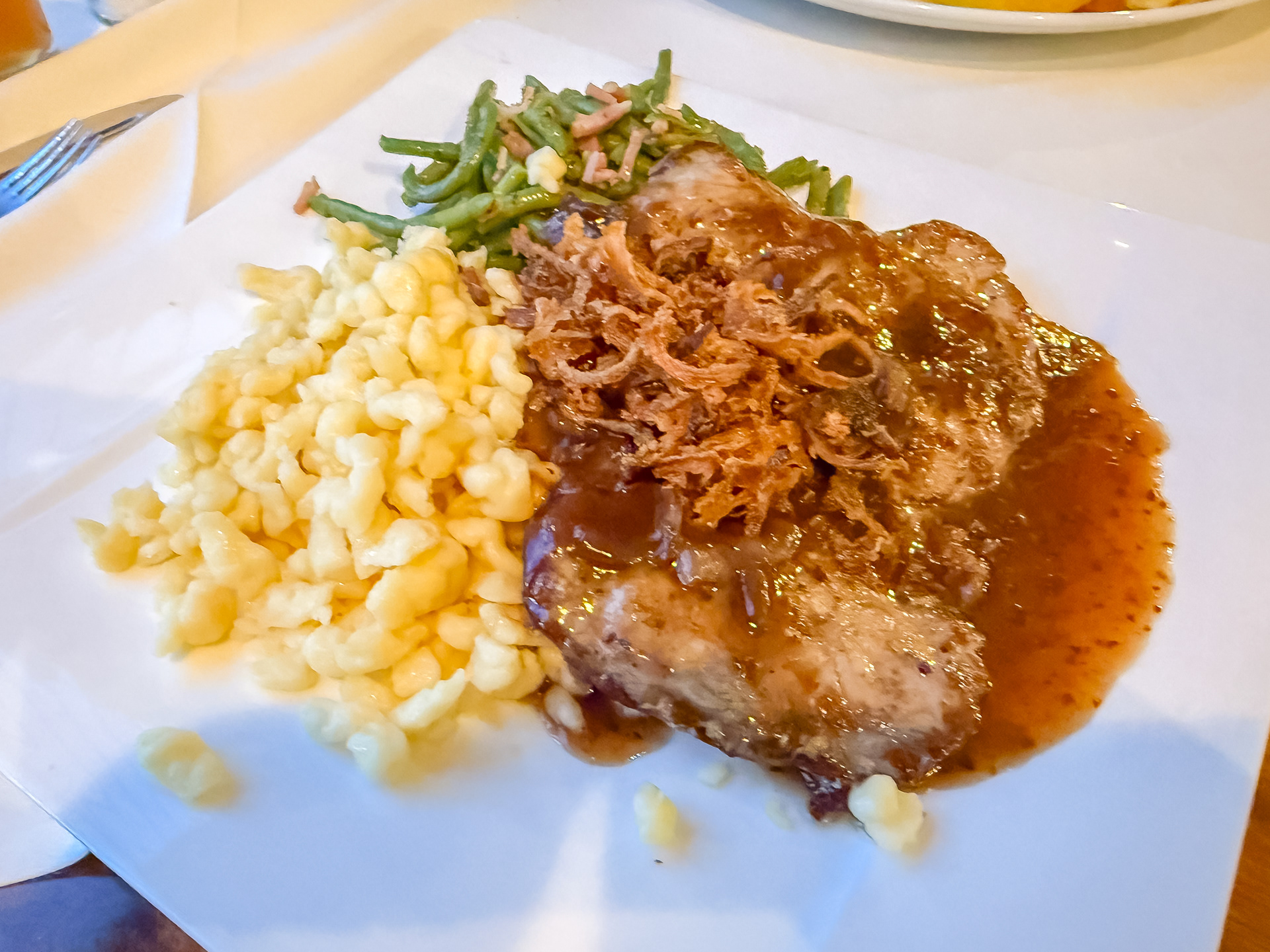
This is the Zwiebelrostbraten on the menu. It was delicious!!
Check out this photo below that I took after dinner. At first, we had no idea what it was. It reminded me of a crashed Star Wars ship or something. It was huge! The reflection at the bottom of the photo is from the water. Facing it, on dry land next to where I stood, were amphitheater-type bleachers that rose up quite high.
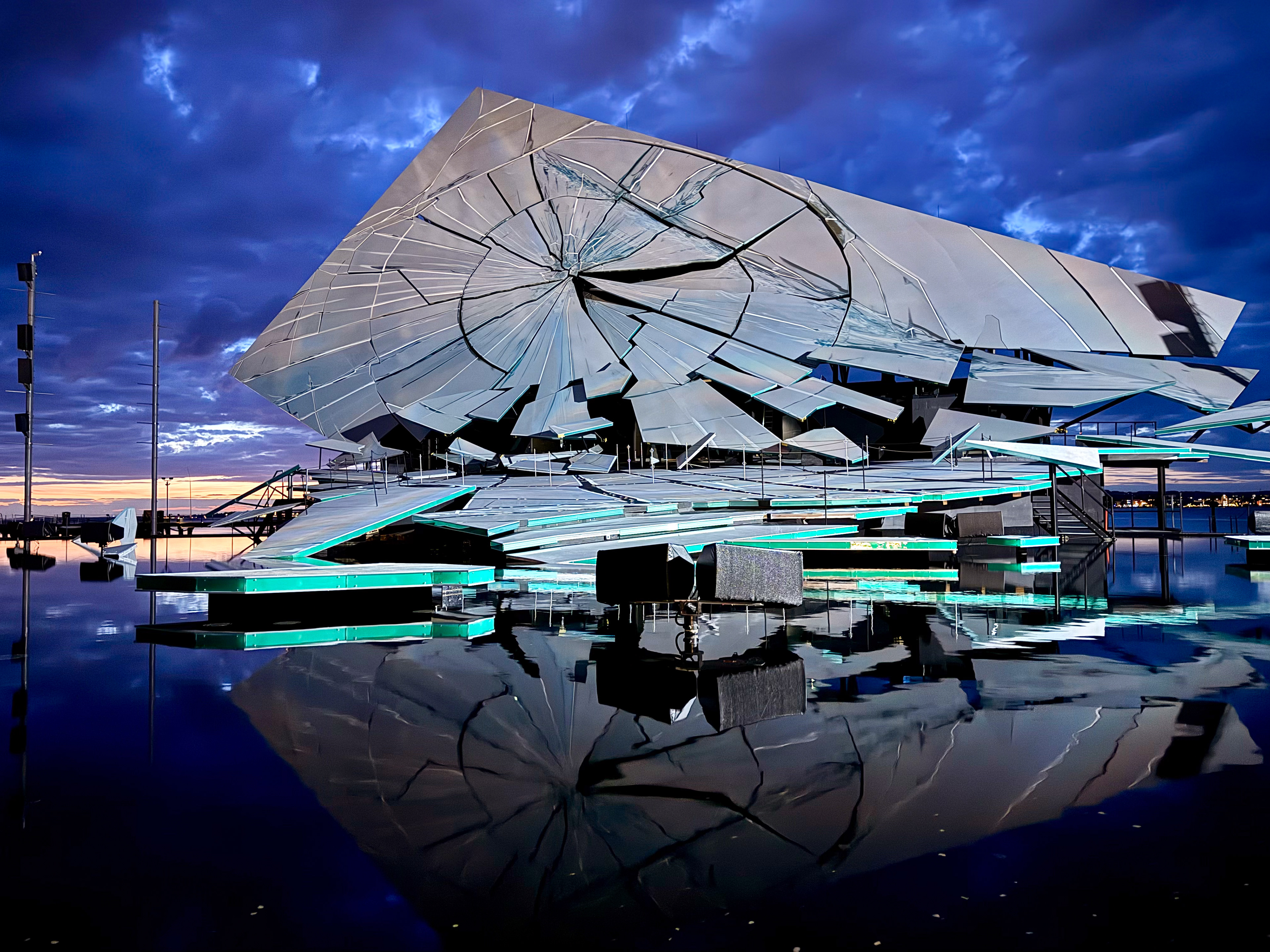
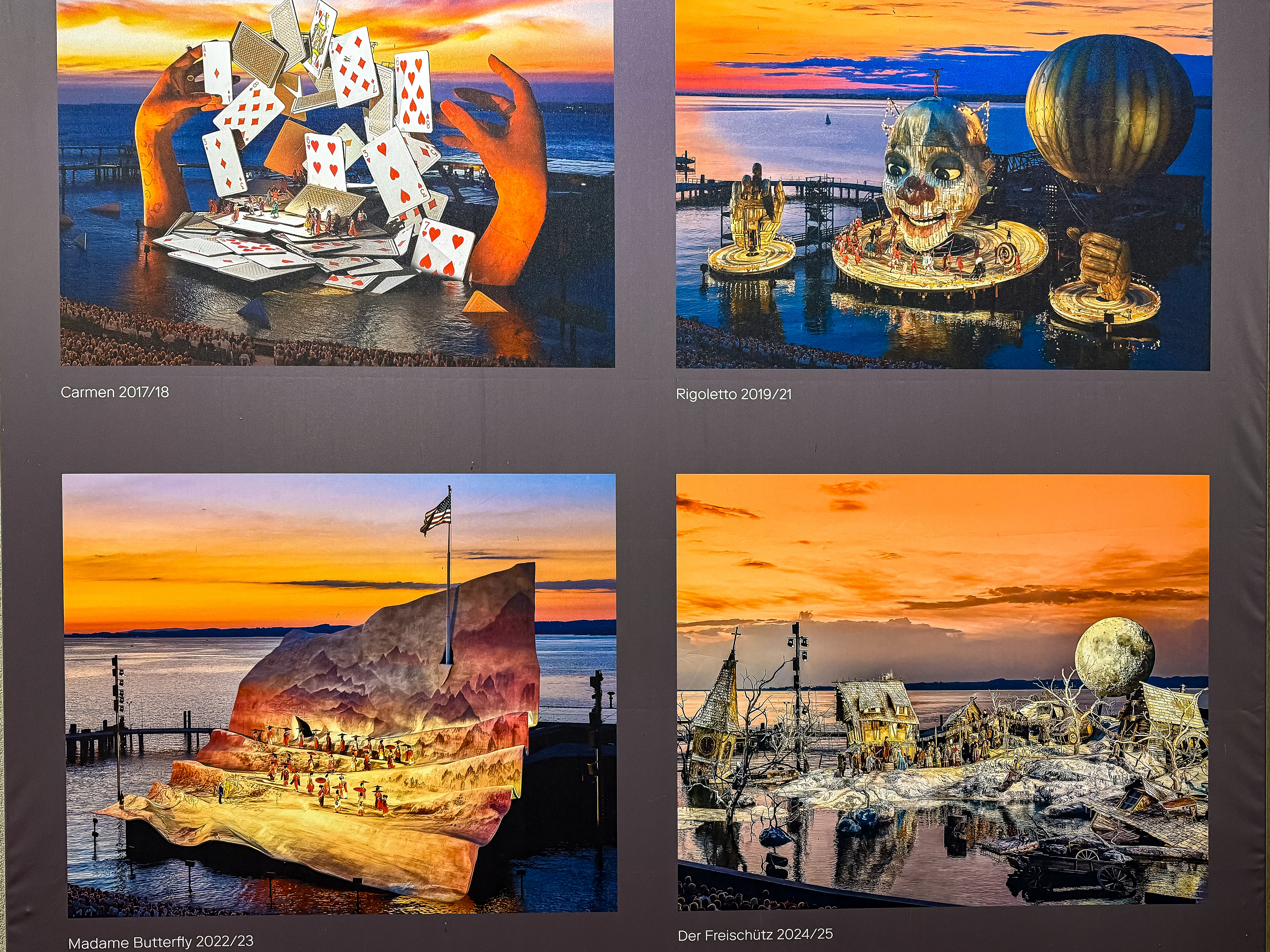
After a little more investigation, we found out that it is actually a stage for an opera production this summer! Giuseppe Verdi’s masterpiece La traviata will premiere on the water for the first time July, 22 2026. They have a big summer festival in Bregenz every year and build a completely brand new, extravagant stage every two years. There was a poster nearby of some of the past stages. Although they are small photos, you can see people down there on the unique massive stages built on the water. Oh how I'd love to see one of the performances!!